16 Best Office Paint Shades to Skyrocket Productivity
We have all stared at a blank, scuffed wall while trying to meet a tight deadline, feeling our energy slowly drain away. If your workspace feels uninspiring or cramped, a fresh coat of paint might be the exact upgrade you need. The colors you surround yourself with directly impact your mood, focus, and daily output. Choosing the best office paint shades can transform a dull spare room or cramped corner into a high-performance productivity zone.
Whether you rent a cozy apartment or want to revamp a room in your house, painting remains one of the most accessible DIY projects available. A simple color swap changes the entire atmosphere of your home office. In this guide, we break down 16 incredible paint shades that enhance focus and creativity. We will also share practical design tips, layout ideas, and decor hacks to help you create a stylish, modern workspace you actually want to spend time in.
Focus-Boosting Color Combinations
If your daily tasks require deep concentration and analytical thinking, cool tones are your best friend. Blues and greens naturally lower your heart rate and promote a sense of calm, allowing you to tackle complex projects without feeling overwhelmed.
1. Crisp Light Blue
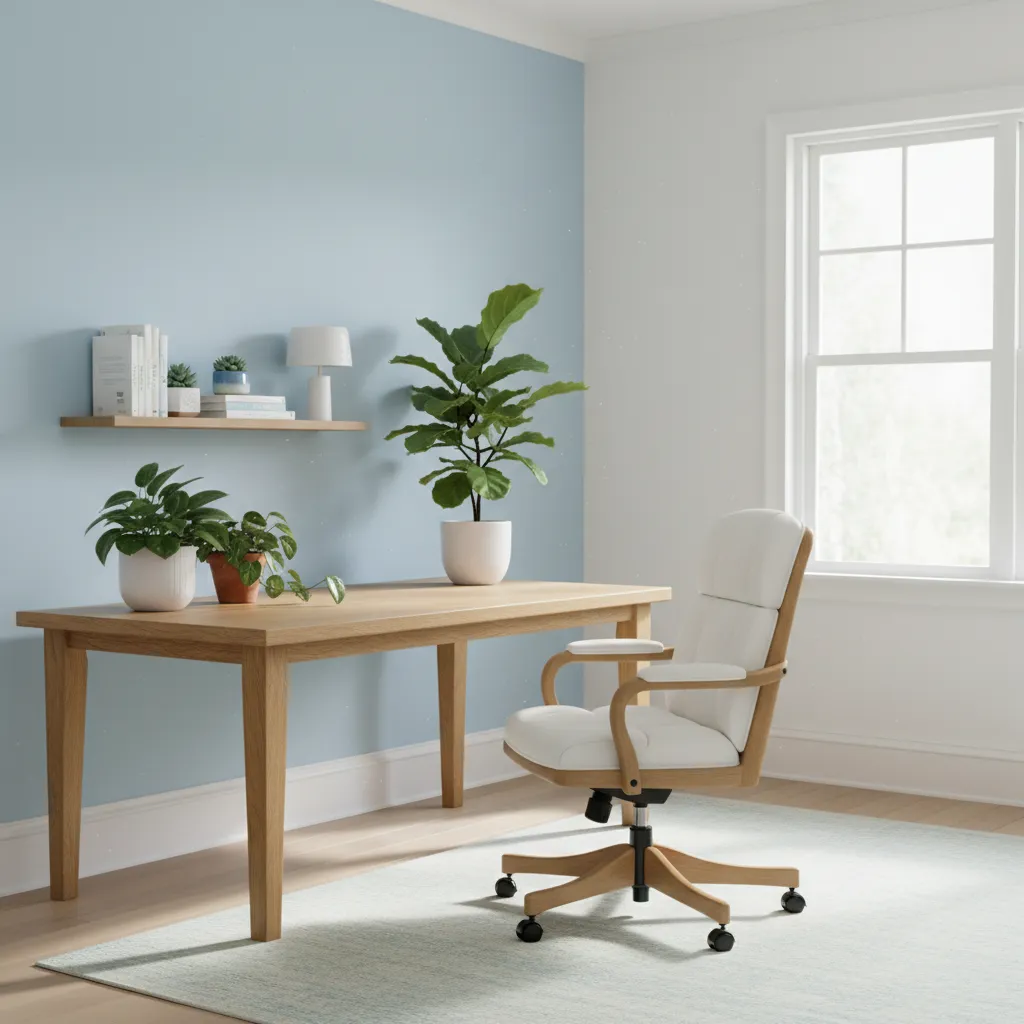
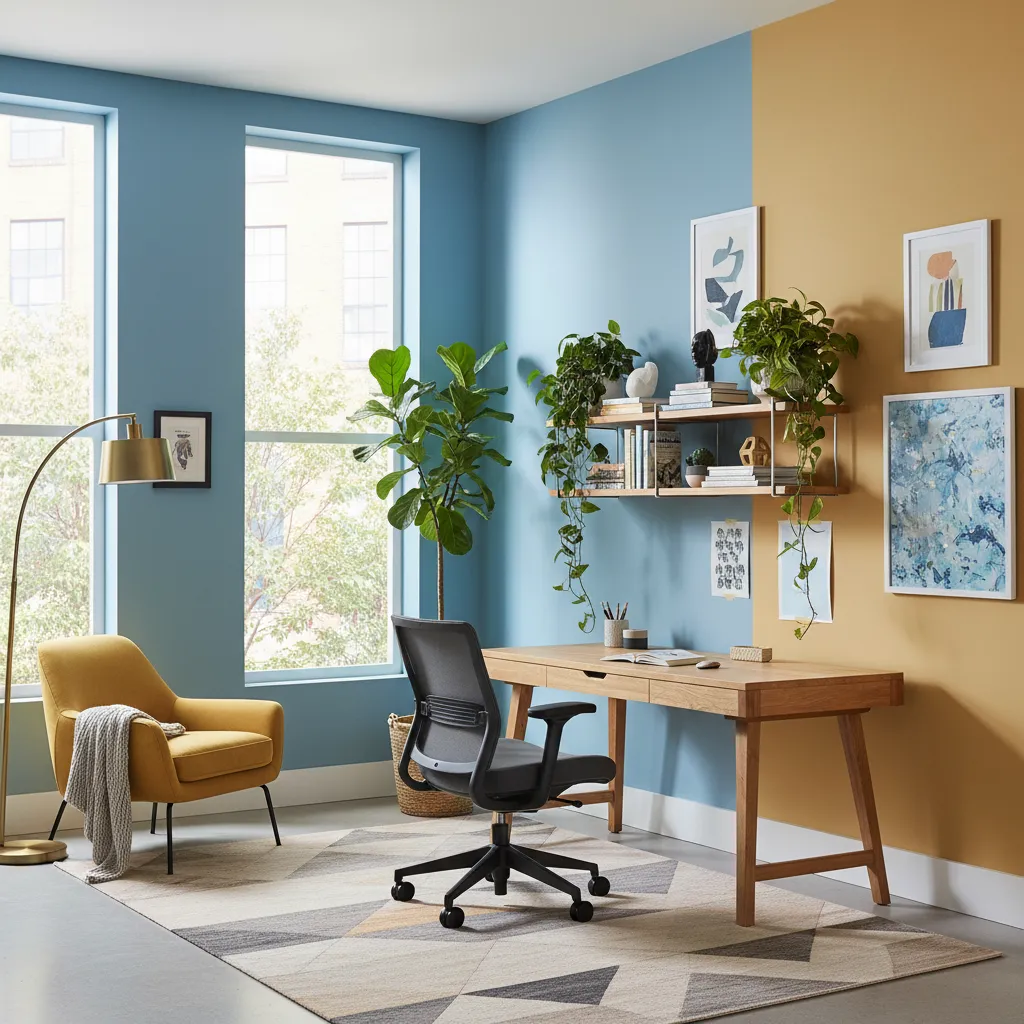
This shade mimics a clear sky, instantly making a room feel open and breathable. Light blue works beautifully with natural wood furniture and crisp white trim. It reduces stress and keeps your mind clear during busy workdays.
2. Sage Green
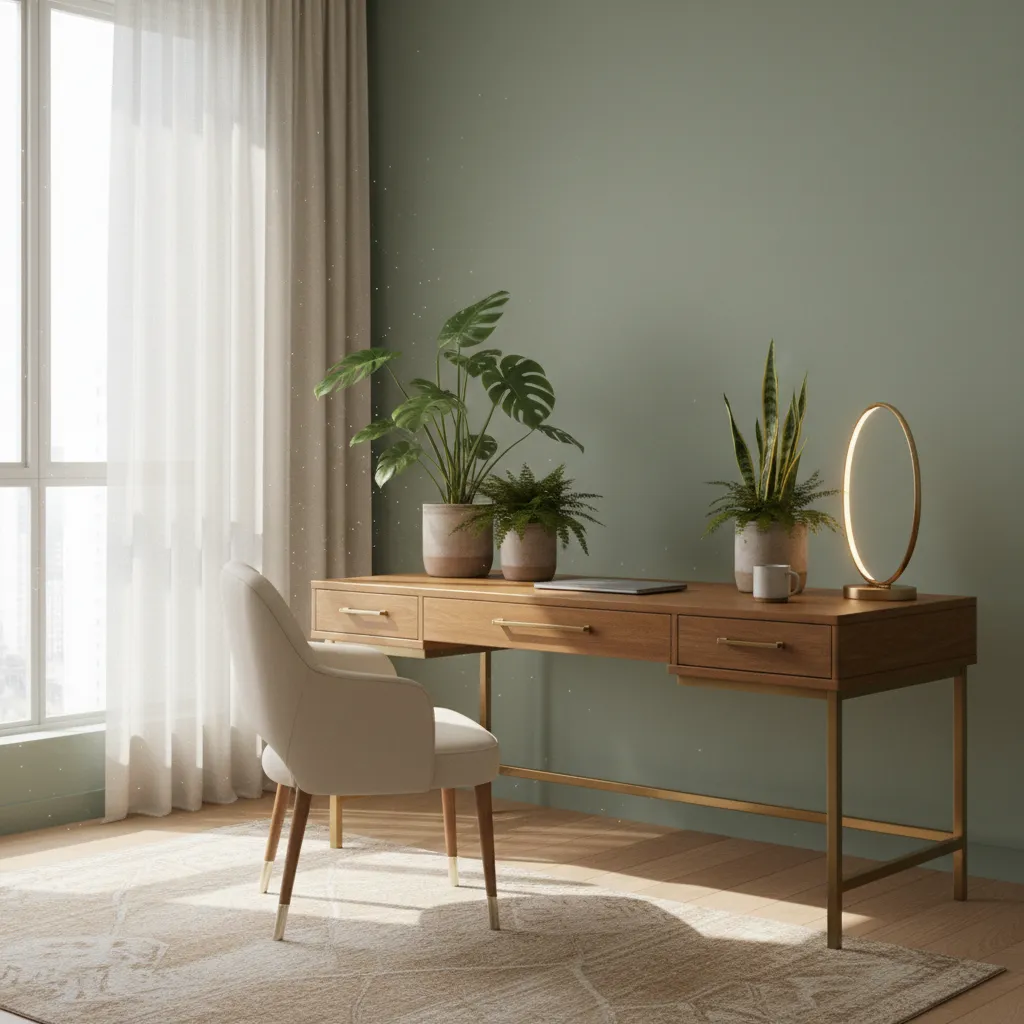
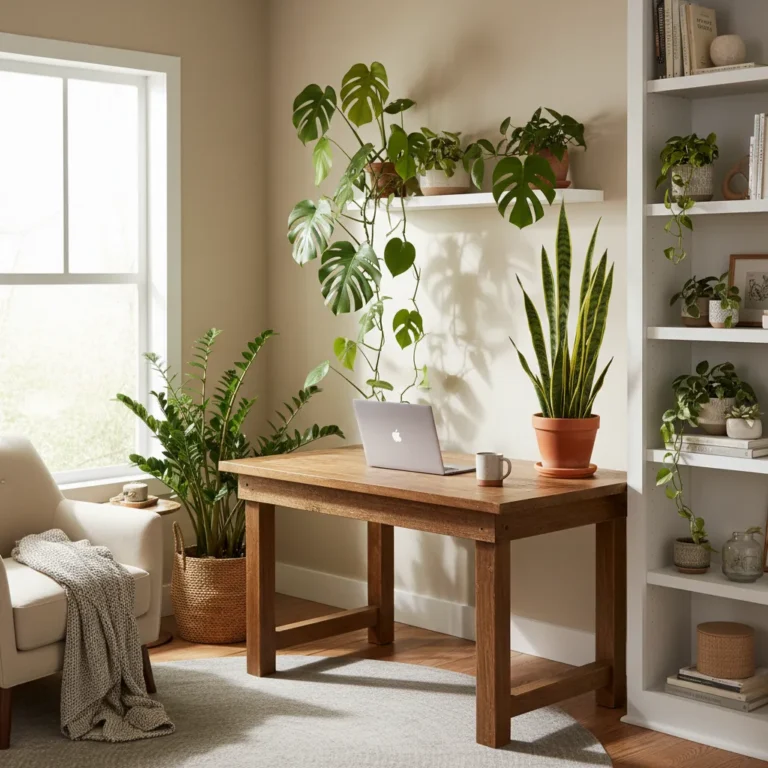
Bringing a touch of nature indoors, sage green is incredibly soothing. It acts as a neutral but offers more personality than a standard gray. Pair sage green walls with brass hardware and leafy desk plants to create an organic, grounding environment.
3. Deep Teal
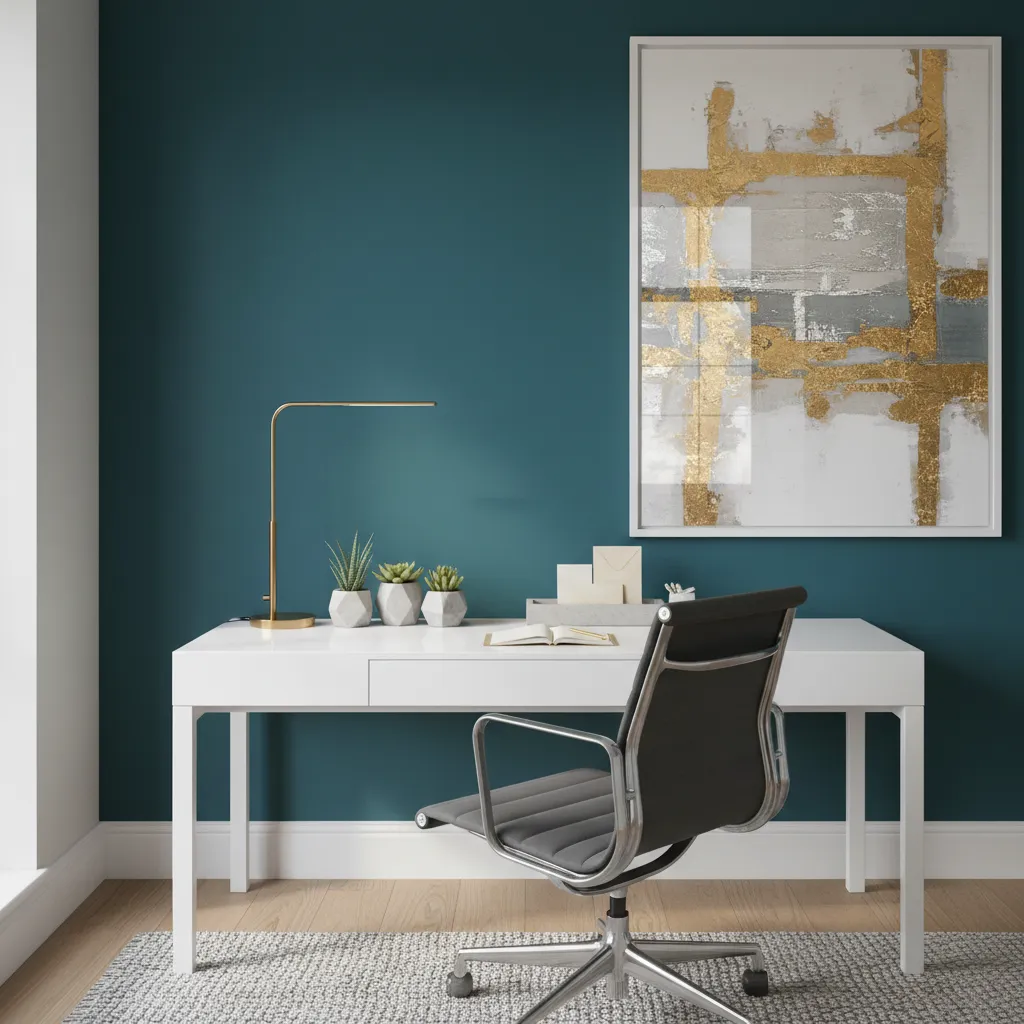
For a bold, sophisticated look, deep teal delivers. This rich blend of blue and green stimulates thought while maintaining a professional vibe. Try painting the lower half of your wall teal and keeping the upper half white for a balanced color combination.
4. Soft Mint
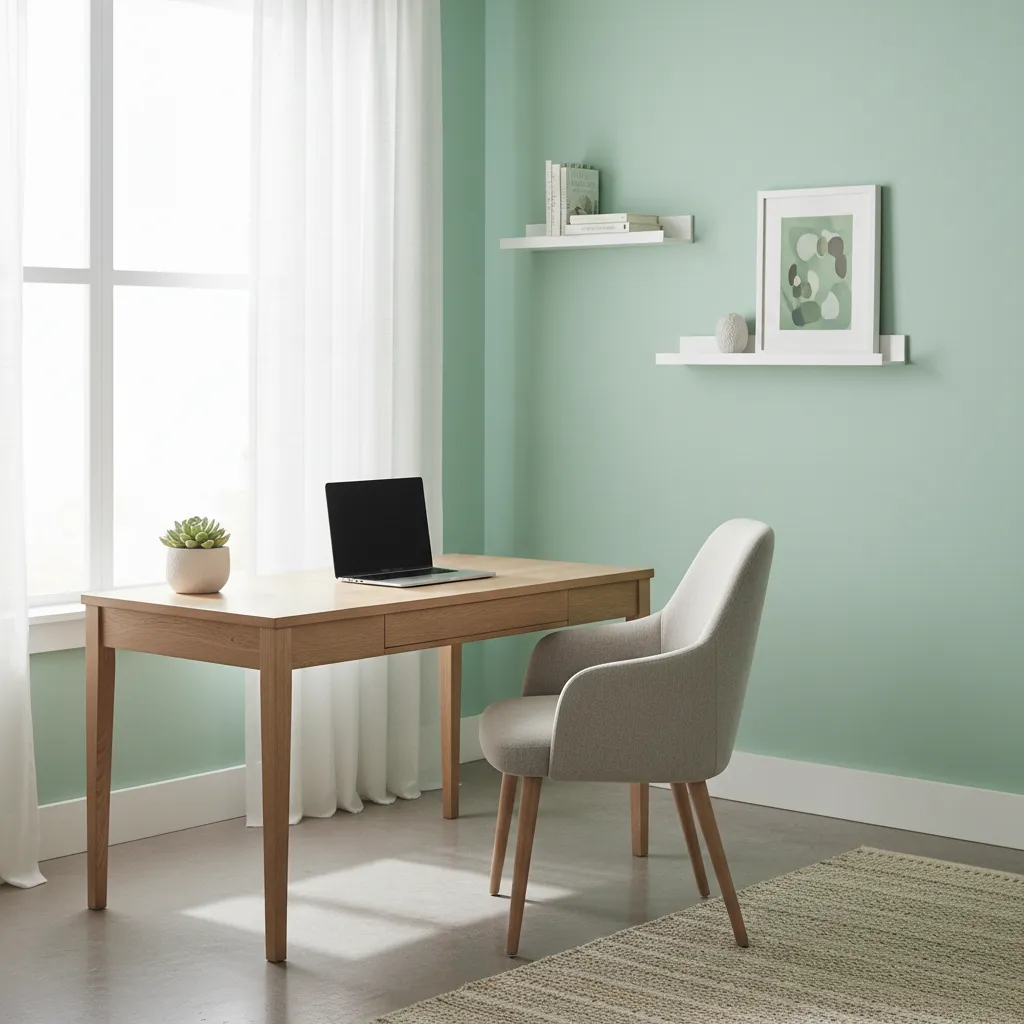
Mint adds a refreshing pop of color without overpowering your senses. It pairs beautifully with light oak desks and minimalist decor.
Design Tip: When using cool colors, warm up the room with textured textiles. A plush woven rug or a leather desk chair prevents the space from feeling too cold or clinical.
Energizing Hues for Creative Layouts
Creative professionals thrive in environments that stimulate energy and innovation. Warm tones naturally evoke feelings of happiness, optimism, and warmth. However, the trick is to use muted versions of these colors so they do not cause eye strain.
5. Soft Butter Yellow
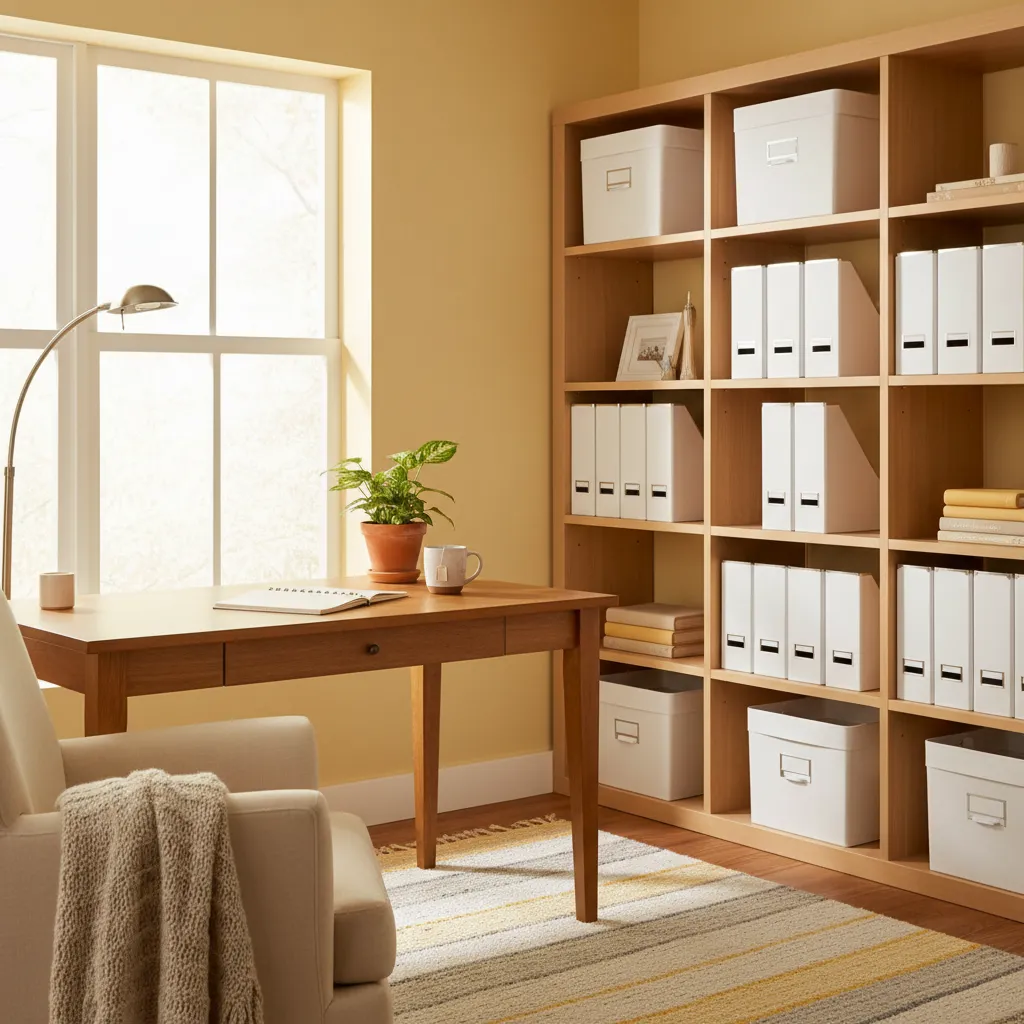
Bright neon yellow is distracting, but a soft butter yellow acts like sunshine on a cloudy day. It brightens up offices that lack natural light and pairs wonderfully with open shelving and white organizational bins.
6. Warm Terracotta
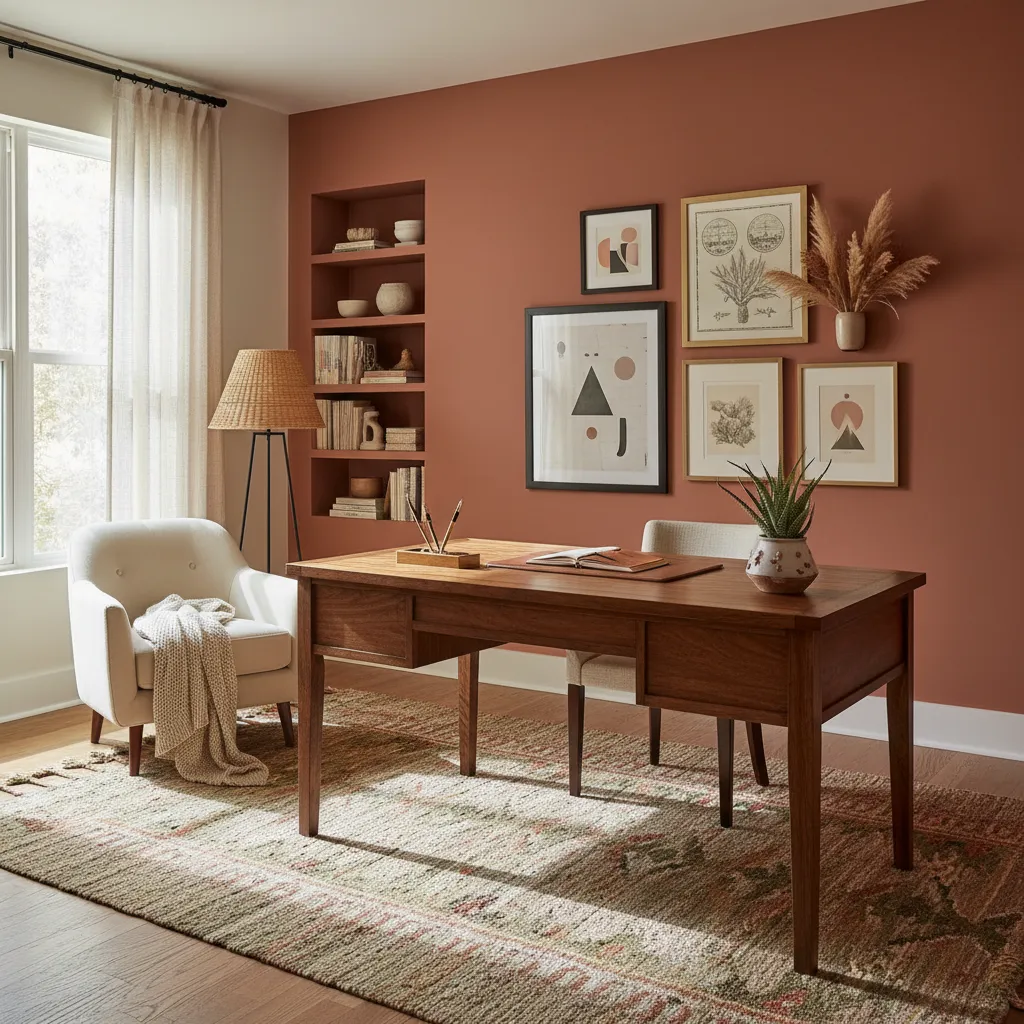
Terracotta brings a rustic, earthy energy to your workspace. This clay-inspired shade feels incredibly grounding. It looks stunning behind a dark wood desk or as a backdrop for a gallery wall of your favorite art prints.
7. Muted Peach
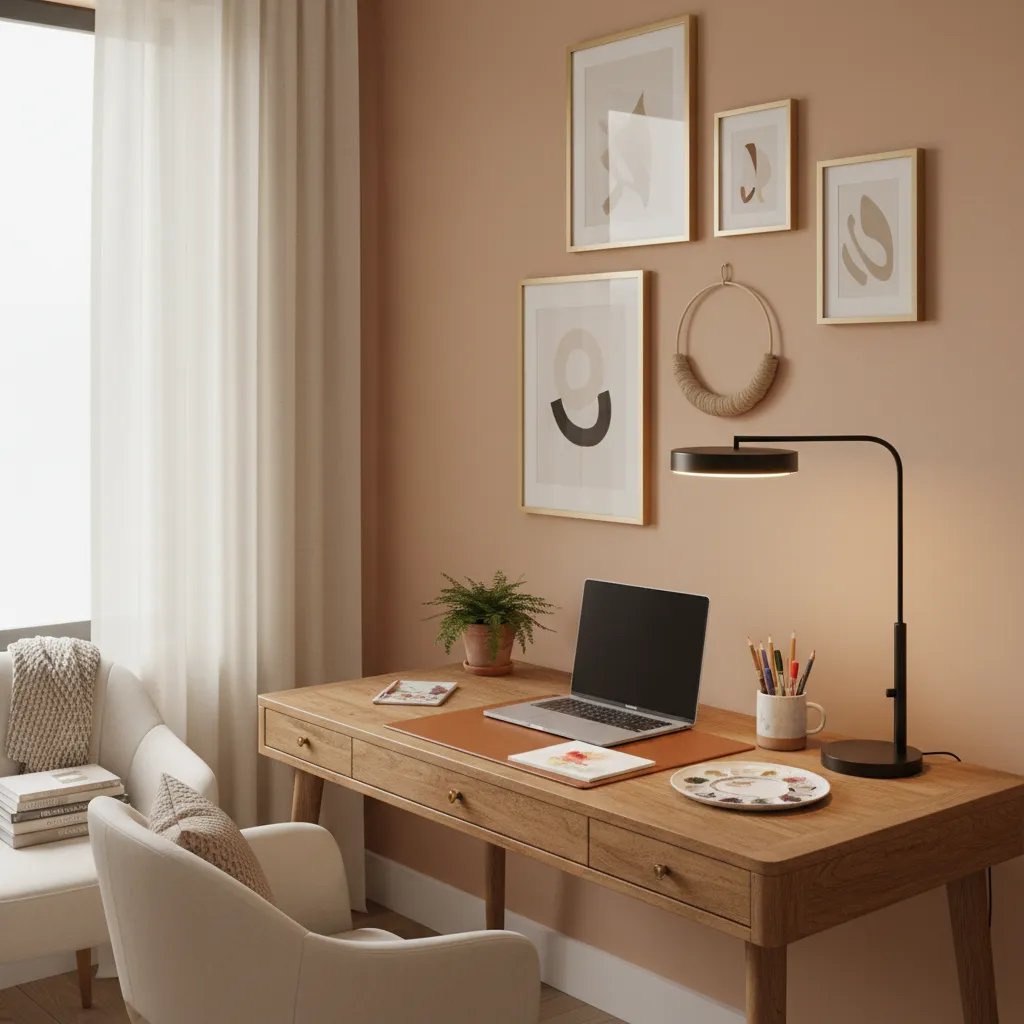
Peach offers a playful yet refined backdrop. It warms up north-facing rooms that tend to get chilly, bluish light. Try using peach as an accent color behind your computer monitor to reduce the harshness of blue light from your screen.
8. Dusty Rose
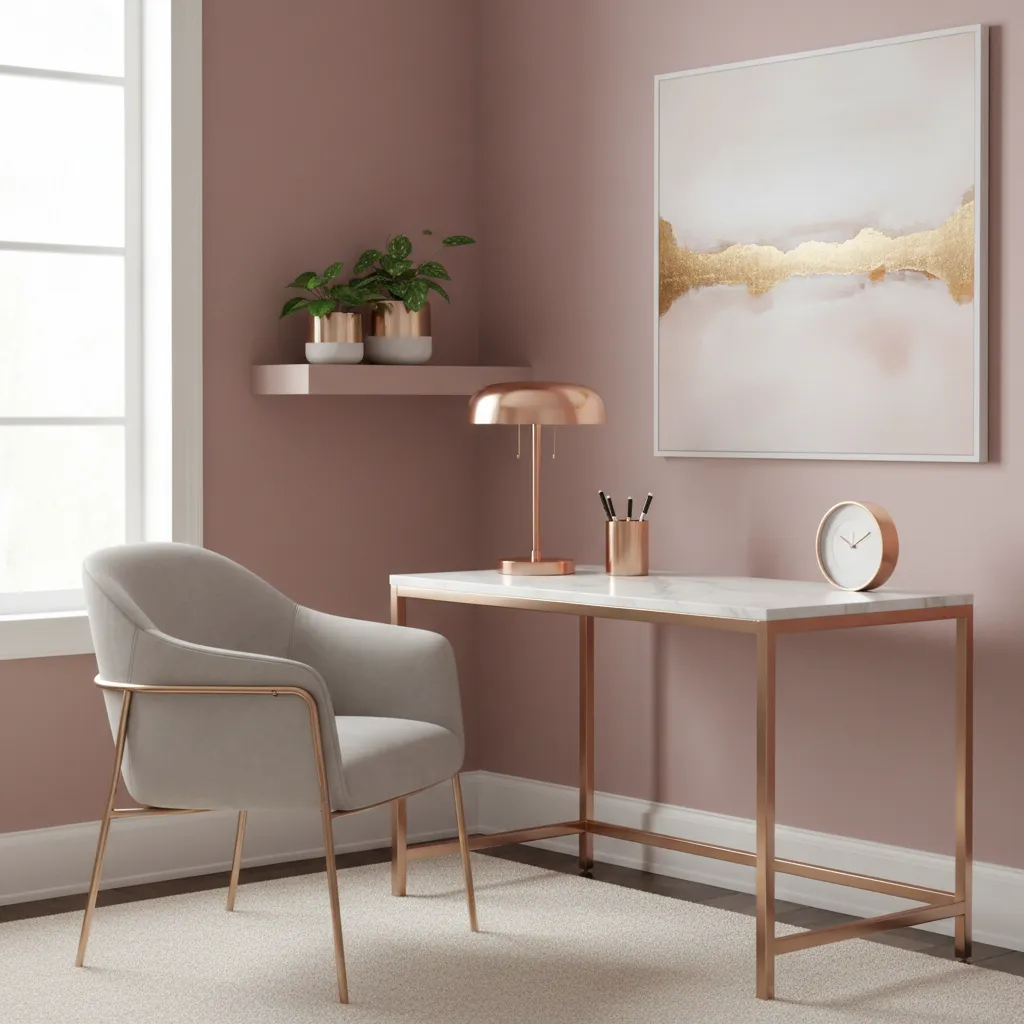
Dusty rose is a sophisticated, mature pink that encourages creative thinking. It pairs perfectly with metallic accents like copper or rose gold desk accessories.
Layout Idea: If you choose a warm, energizing paint shade, position your desk facing the door rather than the wall. This “command position” boosts confidence and makes your creative space feel like a true executive suite.
Small Space Solutions: Light and Neutral Tones
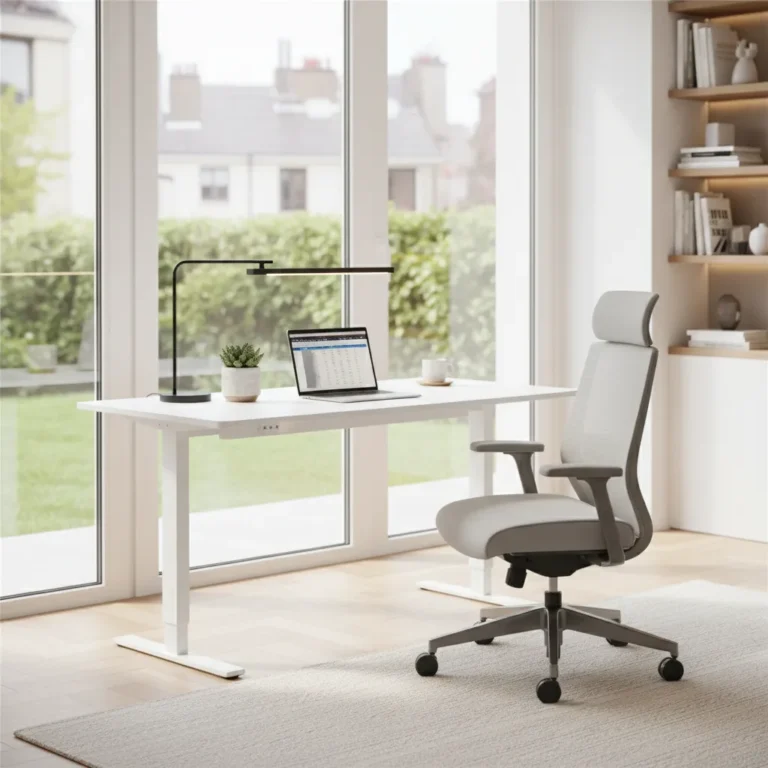
Many of us work out of transformed closets, small bedroom corners, or tight apartment spaces. The right neutral paint can visually expand your square footage, making a cramped area feel airy and expansive.
9. Warm White
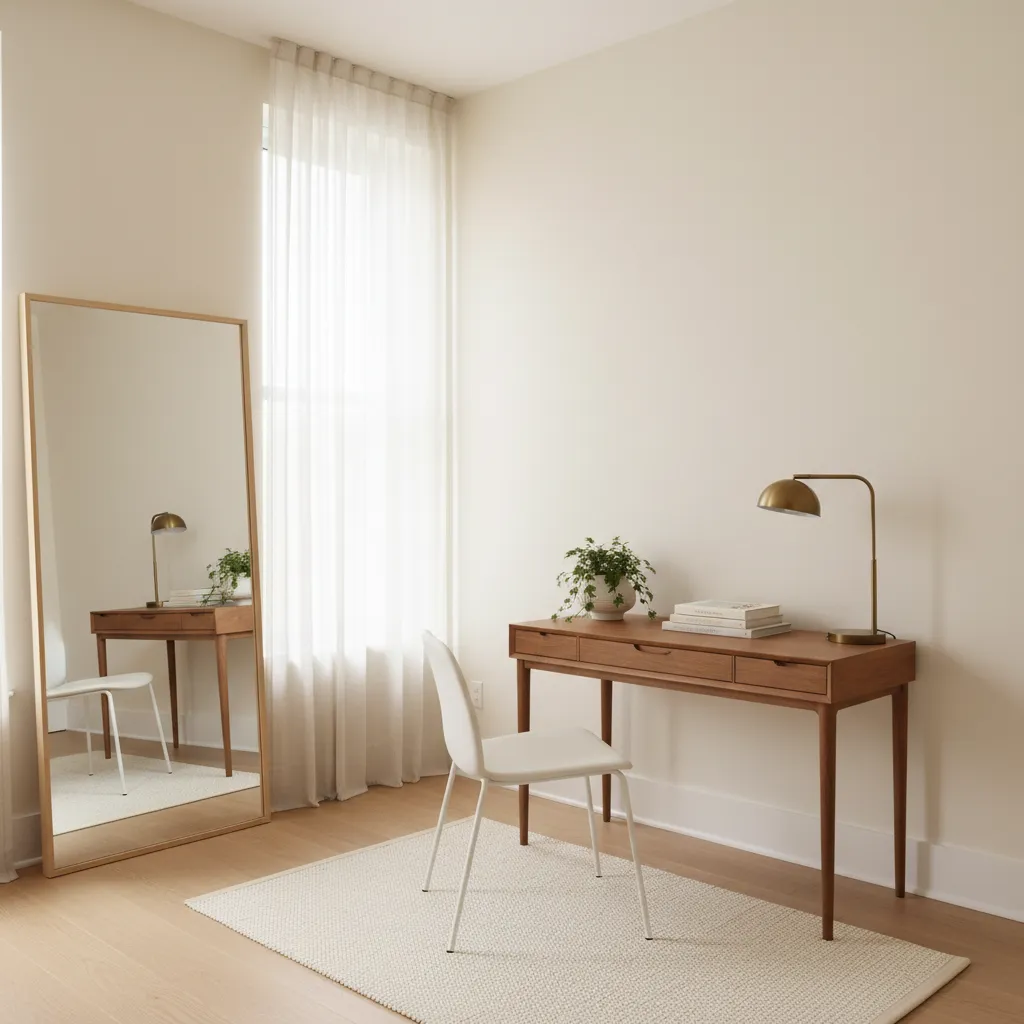
Stark hospital white can feel sterile, but a warm white with creamy undertones feels inviting. Warm white bounces light around the room, making it the ultimate small space solution. It also gives you total freedom to switch up your colorful decor whenever you like.
10. Greige (Gray-Beige)
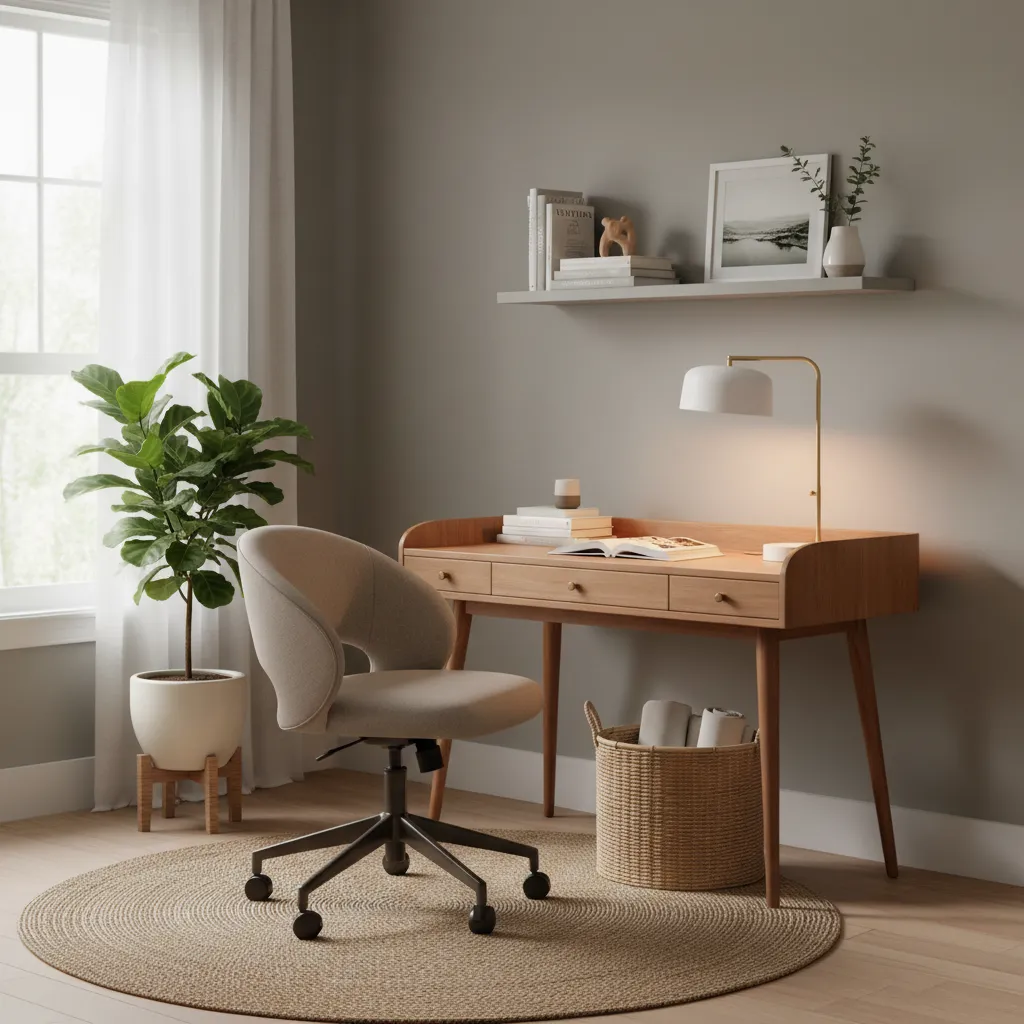
The perfect middle ground between cool gray and warm beige. Greige offers a sophisticated backdrop that does not distract you from your work. It is highly versatile and matches almost any furniture style, from mid-century modern to industrial.
11. Pale Oatmeal
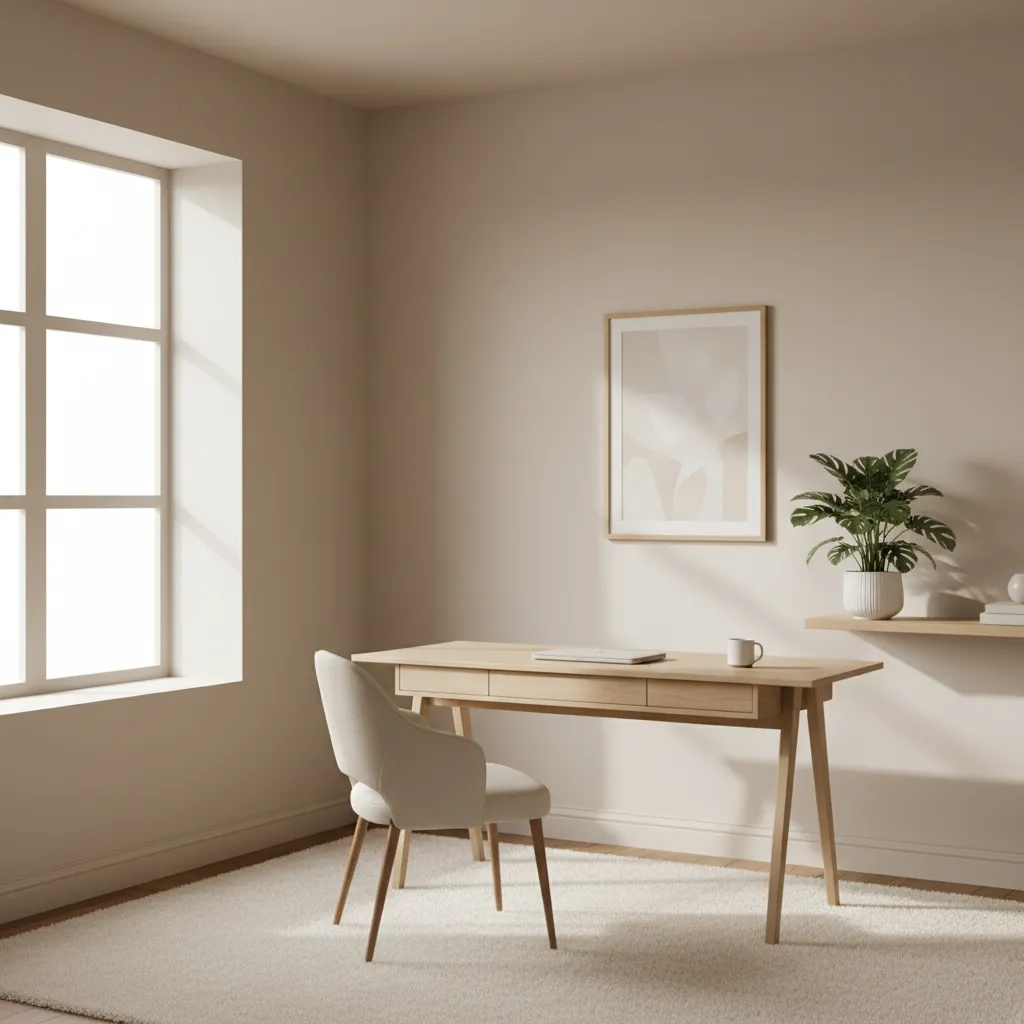
Oatmeal adds subtle texture and warmth. It is slightly darker than white but light enough to keep your room feeling spacious. This shade works incredibly well with minimalist styling and natural textures like rattan and jute.
12. Soft Lavender
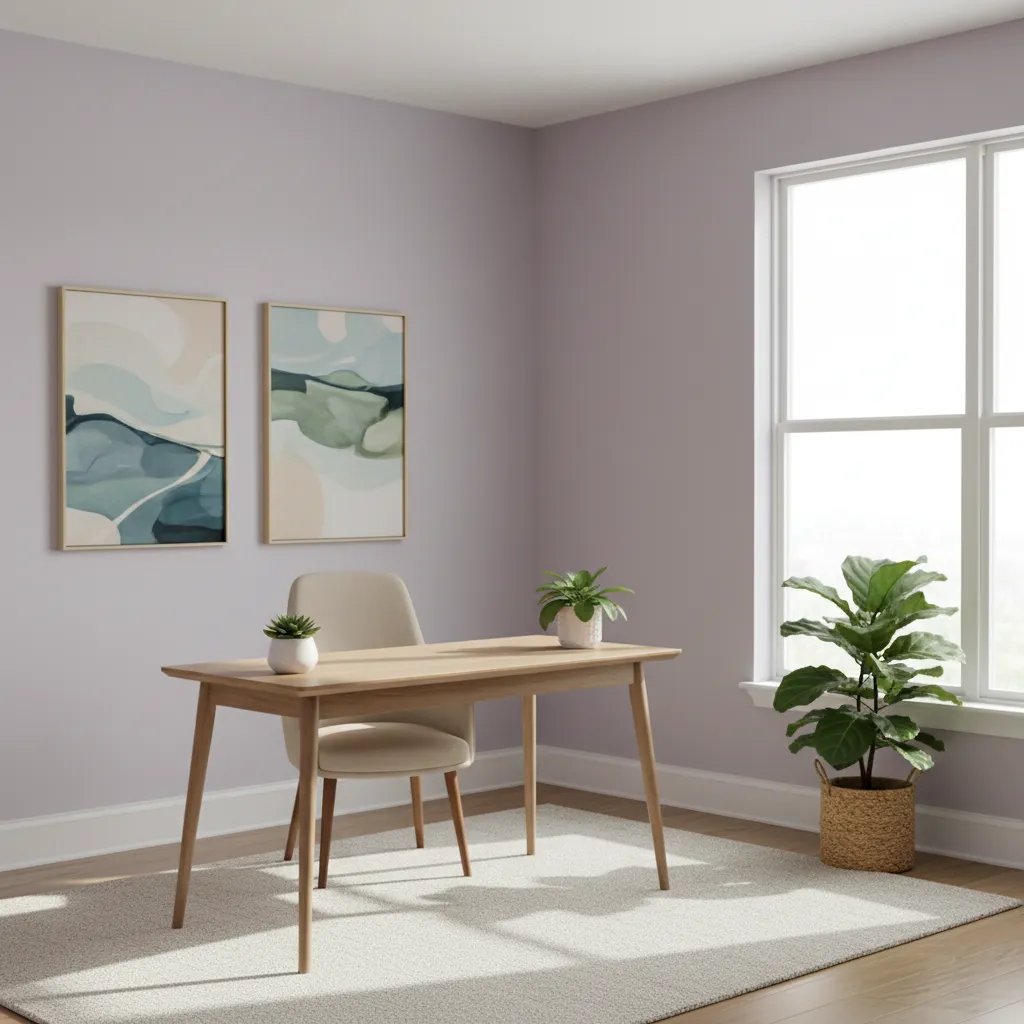
While not a traditional neutral, pale lavender functions like one in a small room. It is historically known to reduce anxiety and promote tranquility. A lavender office feels unique, fresh, and visually expansive.
Styling Trick: Hang a large mirror on the wall opposite your window in a small office. Combined with a light paint shade, the mirror will double the natural light and make the room feel twice as large.
Dramatic Moody Shades and Lighting Tips
Dark colors are having a massive moment in interior design. A moody office feels luxurious, intimate, and highly focused. Dark shades absorb light, reducing glare on your computer screen.
13. Navy Blue
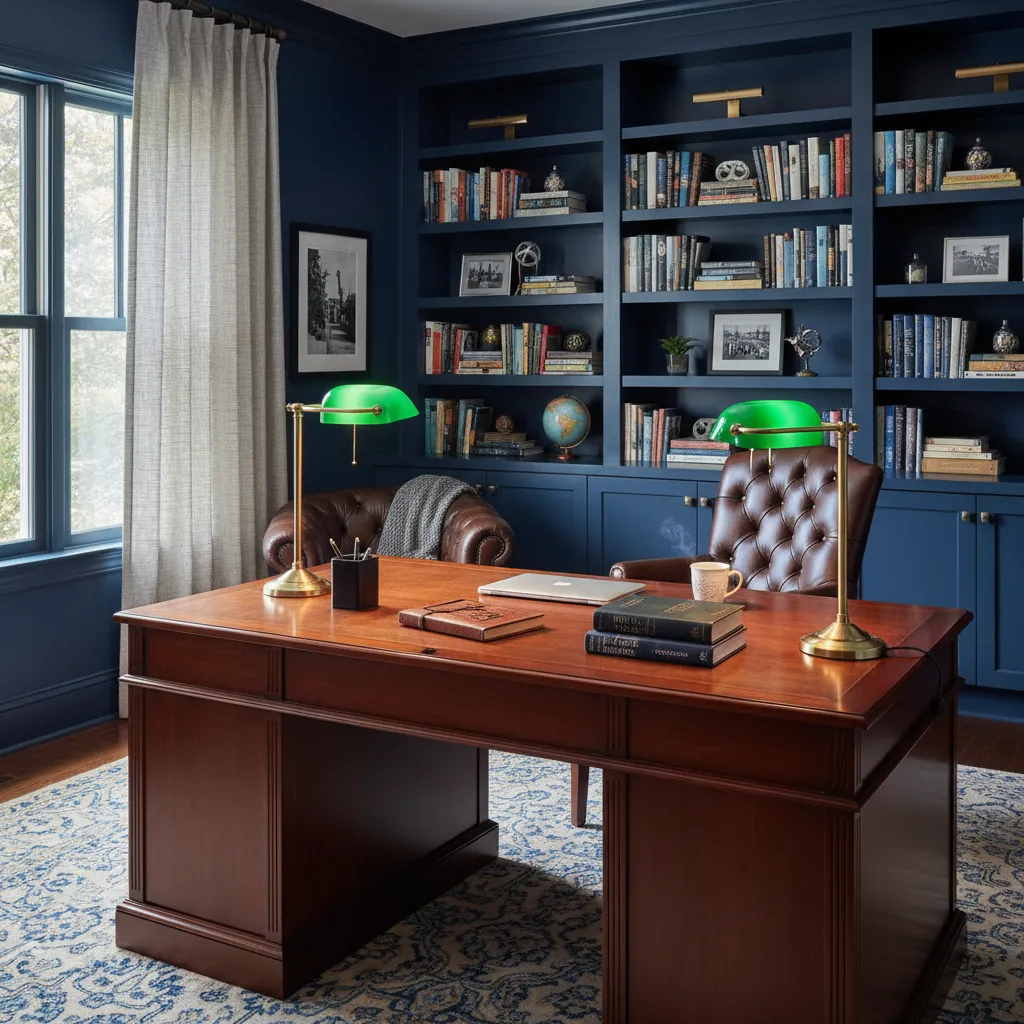
Navy is the ultimate power color. It commands respect and creates a cozy, library-like atmosphere. Wrap the entire room in navy—including the baseboards—for a seamless, high-end look.
14. Forest Green
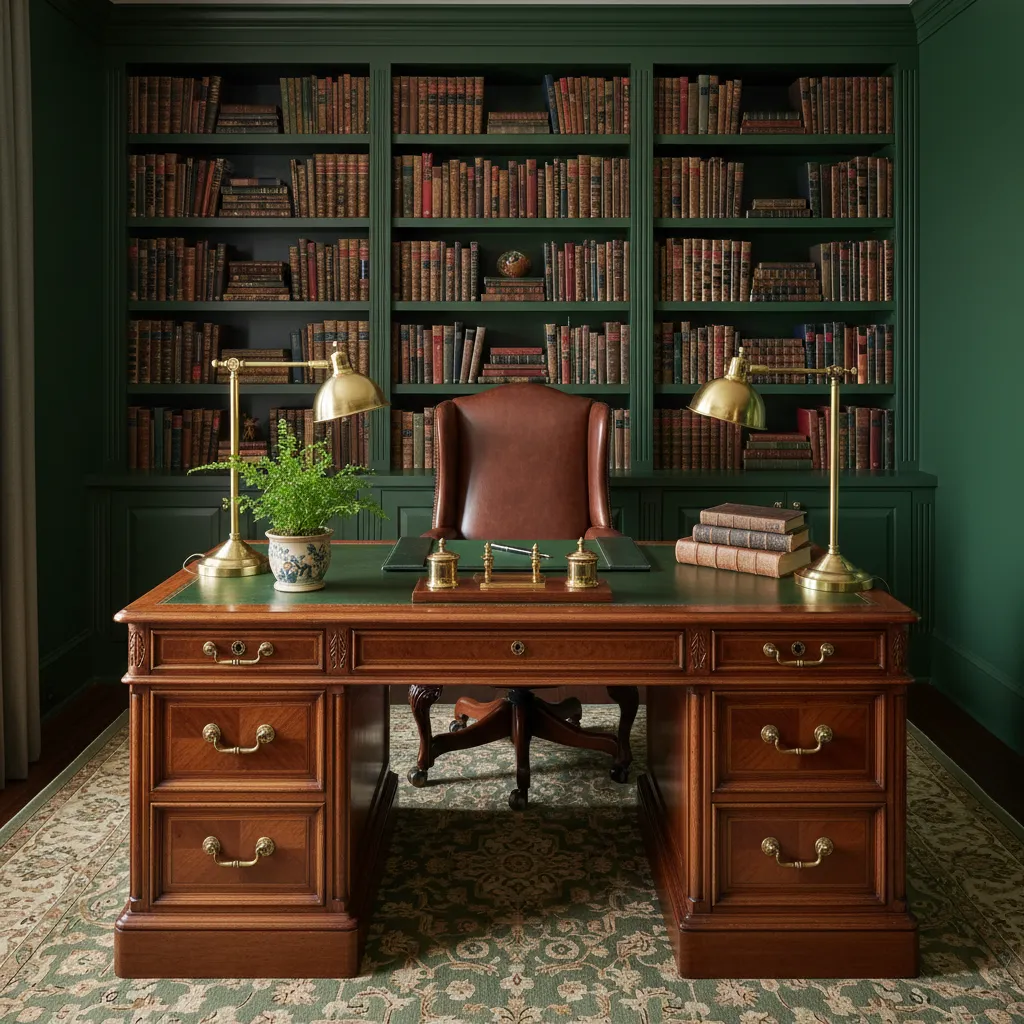
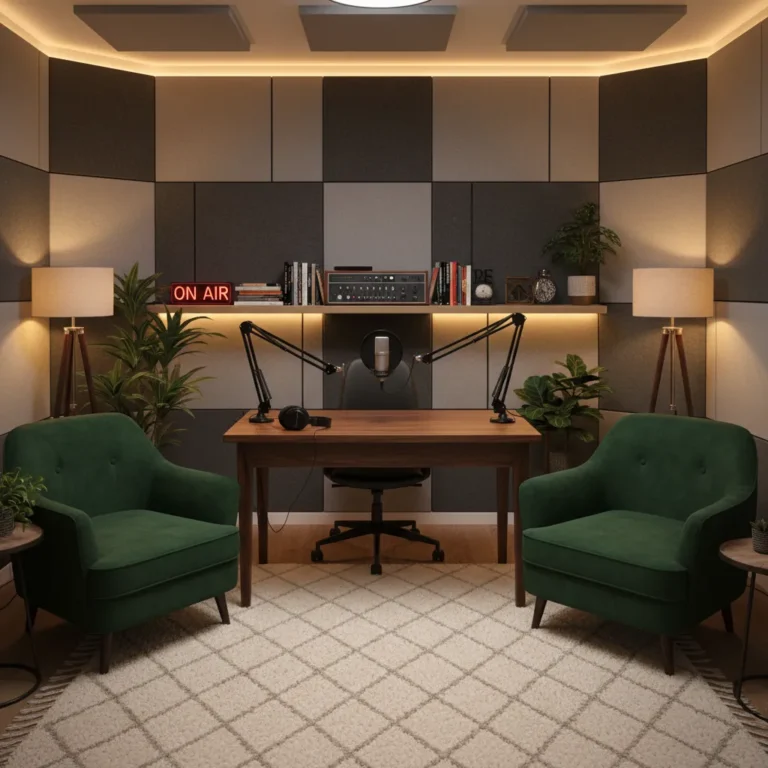
Deep forest green brings the quiet focus of a dense woodland into your home. It pairs perfectly with mahogany furniture and vintage brass desk lamps.
15. Charcoal Gray
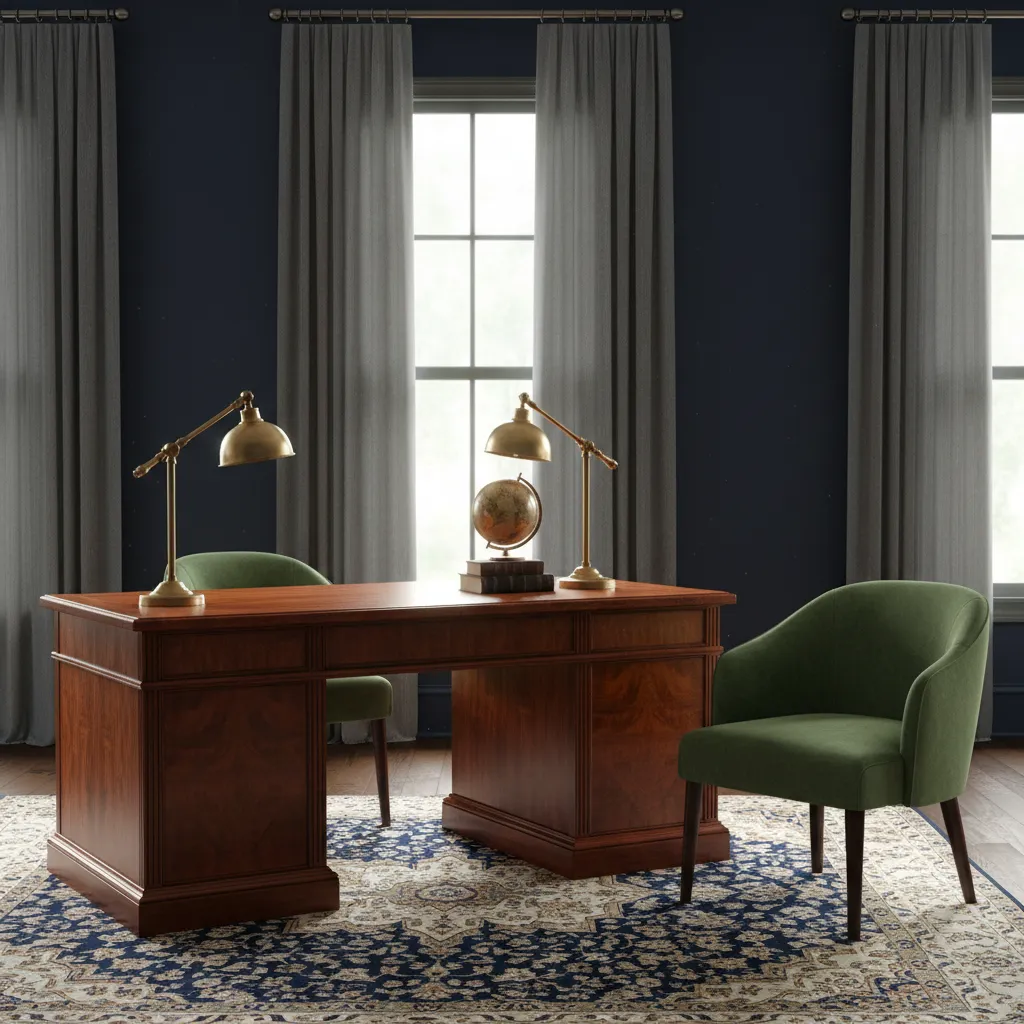
For a modern, sleek aesthetic, charcoal gray is unbeatable. It provides a striking contrast against colorful artwork or a bright white ceiling.
16. Rich Plum
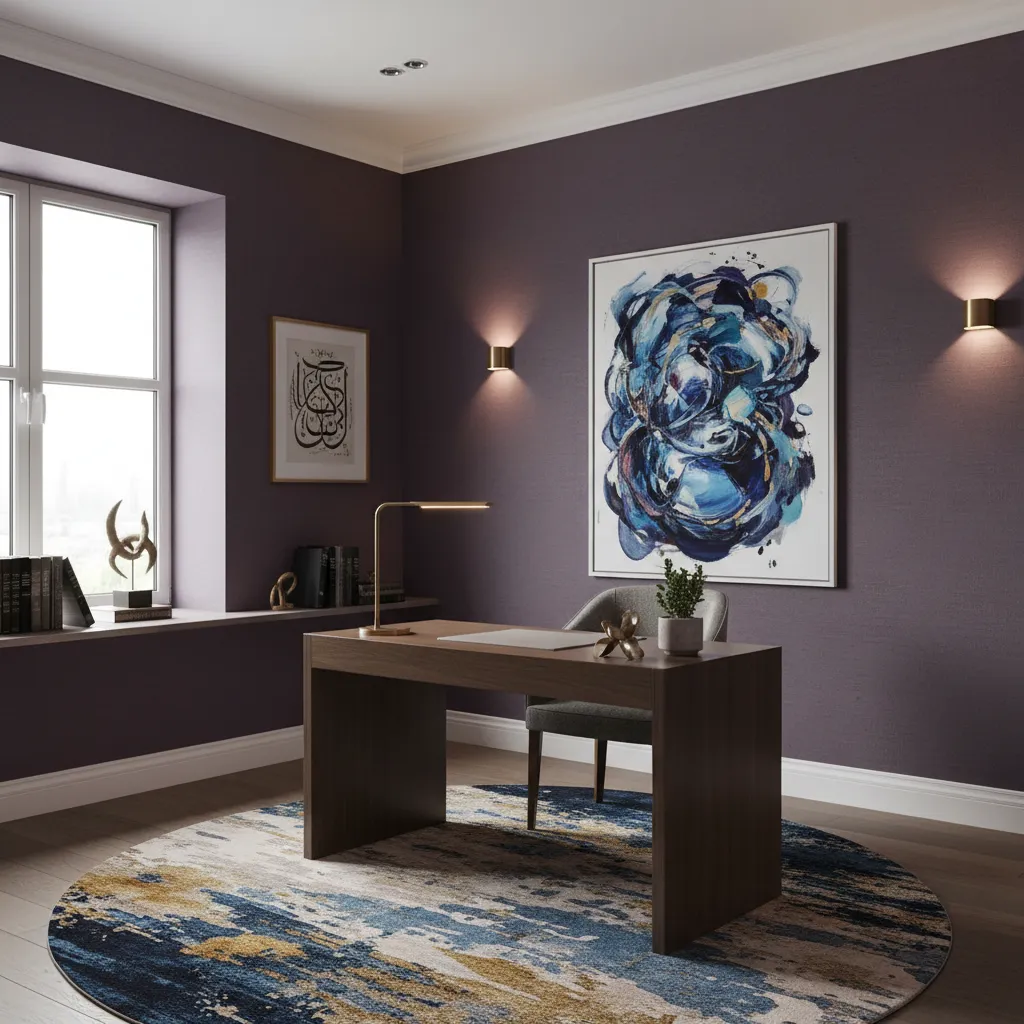
Plum is daring but highly rewarding. This deep purple hue sparks imagination and luxury. It works best as an accent wall behind your desk to anchor the room.
Lighting Tip: Dark paint absorbs light, so you must layer your lighting. Combine a bright overhead fixture with a focused desk task lamp and a soft floor lamp in the corner. This prevents your moody office from turning into a dark cave.
Mini Step-by-Step Guide: Prepping Your Workspace for Paint
Before you crack open that can of focus-boosting color, proper preparation is essential for a professional finish. Follow this quick guide to get your office ready:
- Step 1: Clear the Room. Remove all electronics, files, and small furniture. Push large desks to the center of the room and cover them with a heavy drop cloth.
- Step 2: Clean the Walls. Dust and wash your walls with a mild soap solution. Paint will not adhere properly to walls covered in dust or accidental coffee splatters.
- Step 3: Patch and Sand. Fill any nail holes from old calendars or artwork with spackle. Once dry, sand the spots smooth so they vanish under the new paint.
- Step 4: Tape it Off. Use high-quality painter’s tape along the baseboards, window frames, and ceiling edges. Press the tape down firmly to prevent the paint from bleeding through.
Common Mistakes to Avoid
Even the most beautiful office paint shades can fall flat if applied incorrectly. Here are a few common pitfalls to steer clear of during your decor project.
Testing Paint Improperly
Never choose a paint color based solely on a tiny paper swatch in the hardware store. Store lighting is entirely different from the light in your home. Always buy a small sample pot and paint a large square on your office wall. Observe how the color shifts from morning sunlight to evening lamp light before making your final decision.
Ignoring the Ceiling
Most people paint their walls and leave the ceiling standard white. If you are painting your office a dark or bold color, a stark white ceiling can look jarring. Consider painting the ceiling a shade lighter than your walls, or embrace the “color drenching” trend by painting the walls, trim, and ceiling the exact same color.
Choosing the Wrong Finish
Avoid high-gloss paint for office walls, as it reflects too much light and highlights every imperfection. Matte finishes look elegant but are hard to clean. An eggshell or satin finish provides the perfect balance—it offers a soft, professional look while remaining easy to wipe down.
Budget-Friendly Ideas
You do not need to spend a fortune to upgrade your workspace. Here are some simple, budget-friendly ideas to transform your home office without breaking the bank.
Create a Strategic Accent Wall
If buying enough high-quality paint for the entire room stretches your budget, just buy one quart. Paint the wall directly behind your desk to create a striking focal point. This anchors your workspace and provides a beautiful background for video calls.
Upcycle Thrifted Furniture
Do not buy a brand-new desk if your current one is looking tired. Use leftover wall paint or pick up a cheap can of chalk paint to give your existing furniture a fresh, modern look. Swapping out standard desk drawer knobs for inexpensive brass pulls from an online retailer instantly elevates the piece.
Use Paint for Zoning
If your office shares space with your living room or bedroom, use a simple painted arch or a large painted square on the wall behind your desk. This visually separates your “work zone” from your “relaxation zone” using only a fraction of a paint can.
Conclusion
Creating a workspace that inspires you does not require a massive renovation or a hefty budget. By simply choosing the right office paint shades, you can completely alter the energy of your room, boosting your focus, creativity, and daily productivity.
Whether you opt for a calming sage green to soothe your nerves, an energizing butter yellow to spark creativity, or a moody navy blue to anchor your focus, your environment plays a massive role in your success. Remember to test your colors in natural light, thoughtfully plan your layout, and layer your lighting for the best results. Grab a brush, pick your favorite shade from this list, and start transforming your home office into a space where you actually love to work.