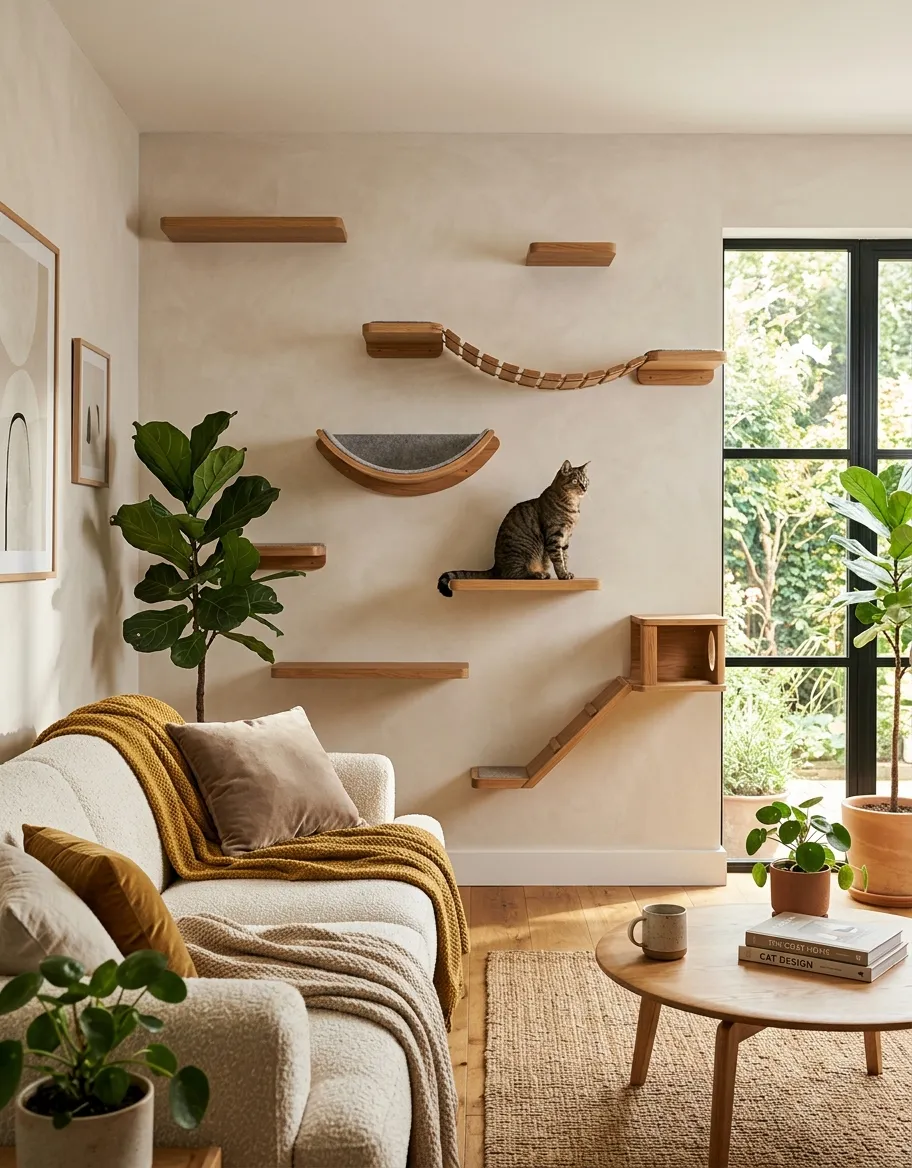
15 Cozy Cat Wall Ideas That Turn Empty Walls Into a Feline Paradise
If your cat spends half the day staring longingly at the top of the bookshelf, it might be time to give them a little vertical real estate of their own. Cat walls have become one of the most popular home decor ideas for pet owners who want their space to feel both stylish and functional. Instead of cluttering the floor with bulky towers, you can send your cat climbing, lounging, and prowling right up the wall—while your living room still looks like something out of a design magazine.
This guide walks through fifteen creative ways to build a cat wall that fits your home’s personality, whether you’re working with a sleek modern apartment or a warm, farmhouse-style cottage. Each idea balances your cat’s natural instincts to climb and perch with decor ideas that actually look intentional, not like an afterthought bolted to the drywall.
Ready to give your cat the penthouse view they deserve? Let’s get into it.
1. Staggered Floating Shelves for a Playful Climb

Floating shelves are the gateway drug of cat wall design. Mount three to five shelves at varying heights and slight offsets, so your cat has to hop from one to the next rather than walking a straight line. Choose solid wood shelves in a finish that matches your existing furniture, and add a thin strip of carpet or sisal to the top of each one for grip. The staggered layout mimics natural climbing patterns, which keeps cats engaged far longer than a single flat perch ever could.
2. A Corner Cat Tree With Built-In Wall Perches

Corners are chronically underused in most homes, which makes them perfect for a vertical cat tree that extends into wall-mounted perches near the ceiling. This hybrid setup gives your cat a sturdy base to climb from, plus a few high perches bolted directly to the wall for extra security. If your home leans toward a rustic style, this pairs beautifully with the kind of natural textures found in Charming Winter Farmhouse Decor Ideas, where wood tones and cozy layering are already part of the palette.
3. Wall-Mounted Cat Hammock

A suspended hammock bolted to the wall gives cats a soft landing spot between climbing sessions. Look for a hammock frame with a canvas or faux-fur sling, and position it near a window so your cat can nap in a sunbeam. Because it hangs slightly away from the wall, it also adds a bit of visual depth to an otherwise flat surface.
4. A Ceiling-Level Cat Highway

For the truly dedicated, a continuous “highway” of shelves that wraps around the top of a room lets your cat travel from one side to the other without ever touching the floor. This idea works especially well in hallways or open-plan living spaces. Keep the shelves narrow and consistent in finish so the highway reads as an architectural detail rather than a jungle gym.
5. A Scratching Post Wall Panel

Instead of a freestanding scratching post, consider mounting a full panel of sisal rope or reclaimed wood directly to the wall. This doubles as a scratching surface and a rustic accent piece. It’s a smart way to protect your furniture while adding texture, and it fits right into a broader mix of natural materials in the room.
6. A Window Perch Nook

Few things make a cat happier than a front-row seat to birdwatching. Build a small platform into a window wall, cushioned with a washable pad, so your cat can stretch out and watch the world go by. If the window gets strong afternoon sun, this spot will likely become your cat’s favorite napping zone within days.
7. A Cat Bridge Connecting Two Rooms

If your cat’s favorite two rooms are separated by a hallway, a wall-mounted bridge spanning the doorway can connect them without disrupting foot traffic below. Use a sturdy plank with raised edges for safety, and anchor it securely into wall studs. This is one of the more ambitious decor ideas on this list, but it creates a genuinely unique focal point.
8. Built-In Wall Niches for Napping

Carved-out niches, whether built during a renovation or added with simple shelving inserts, give cats a den-like spot to curl up in. Line the interior with a soft pad and paint the niche a contrasting color to make it pop. These little pockets of coziness tend to be irresistible to cats who like to feel enclosed while they sleep.
9. A Modular Cube Climbing Wall

Wall-mounted cubes, sold individually or in sets, can be arranged in almost any configuration you like. Stack them in a pyramid shape, scatter them asymmetrically, or line them up in neat rows. Because each cube is mounted separately, you can rearrange the layout whenever you want a refresh without committing to a permanent structure.
10. Rope Ladder Steps

For a slightly more playful look, a rope ladder mounted at an angle between two shelves gives cats an extra challenge and adds a fun, textural element to the wall. Choose a thick, cat-safe rope that can handle regular scratching and climbing, and secure both ends tightly to avoid any wobble.
11. A Faux Rock Climbing Wall

Borrowing from actual rock climbing walls, small resin or wooden “hand holds” can be mounted in a scattered pattern up the wall. This works particularly well in a playroom or a spare bedroom dedicated to your cat’s activities, since it reads as more of a statement piece than a subtle accent.
12. A Wall-Mounted Feeding Station

Not every cat wall idea has to be about climbing. A small wall-mounted shelf near floor level, fitted with built-in bowls, keeps food and water off the ground and out of the way of foot traffic. It’s a practical addition that still contributes to the overall look of your cat wall system.
13. Acrylic Floating Steps for a Minimalist Look

If you want the climbing structure to feel almost invisible, clear acrylic steps mounted at staggered heights create a “floating” effect that doesn’t compete with your wall art or paint color. This is one of the more sophisticated decor ideas for anyone who wants function without visual clutter. It pairs nicely with the kind of restraint discussed in Hidden Design Secrets Professional Stylists Swear By, where negative space is treated as a design feature rather than an oversight.
14. A Cat-Safe Vertical Garden Wall

Adding a small vertical garden of pet-safe plants like cat grass, spider plants, or Boston ferns near the base of your cat wall brings a bit of greenery into the mix. Just be sure every plant you choose is non-toxic to cats. For more inspiration on layering natural elements throughout your home, take a look at Beautiful Floral Decor Ideas for Every Room, which covers plenty of safe and stylish botanical touches.
15. A Mural-Backed Cat Tree Feature Wall

For the ultimate showstopper, pair your climbing shelves with a painted mural behind them. A soft forest scene, a cloud motif, or a simple abstract pattern turns the entire wall into a feature rather than a practical add-on. If you’re feeling inspired to pick up a paintbrush, Vibrant DIY Wall Murals offers plenty of approachable techniques, even for first-time painters.
Bringing It All Together
Once your cat wall is built, don’t forget the finishing touches. Group a few plants, framed photos, or small trinkets near the base of the structure to help it blend into the rest of your home decor rather than looking like a separate pet zone. If your cat wall happens to sit near your dining area, you can borrow some of the same layering principles found in Warm and Inviting Table Decor Ideas to keep the whole space feeling cohesive.
A well-designed cat wall isn’t just about giving your cat something to climb. It’s about creating a shared space where your pet’s instincts and your personal style can exist side by side. Start with one or two ideas from this list, see how your cat responds, and build outward from there. Before long, you’ll have a feline playground that feels like it was always meant to be part of your home.
FAQs
How high should a cat wall be built?
Most cat walls work well starting around 18 inches off the ground and climbing up to just below the ceiling. Leave enough space between shelves (roughly 12 to 16 inches) so your cat can jump comfortably without straining.
What materials are safest for a DIY cat wall?
Solid wood, sisal rope, and cat-safe carpet are all good choices. Avoid materials that splinter easily or contain toxic finishes, and always check that any adhesives or paints used are pet-safe once dry.
Will a cat wall damage my walls?
When installed correctly into wall studs with the right anchors, a cat wall should cause minimal damage. It’s worth patching and repainting the mounting area if you ever decide to remove the structure.
Can a cat wall work in a small apartment?
Yes. In fact, cat walls are especially useful in small spaces since they use vertical square footage instead of taking up floor space. A few staggered shelves or a single corner tree can make a big difference without crowding the room.
How do I get my cat to actually use the wall?
Start low and encourage exploration with treats or toys placed on the first shelf. Most cats will naturally begin climbing higher once they feel confident, especially if the surfaces have good grip and a stable feel.
Do cat walls work well with multiple cats?
Absolutely, though it’s a good idea to add extra shelves and multiple pathways so cats have more than one route to the top. This helps prevent territorial standoffs on a single narrow shelf.


