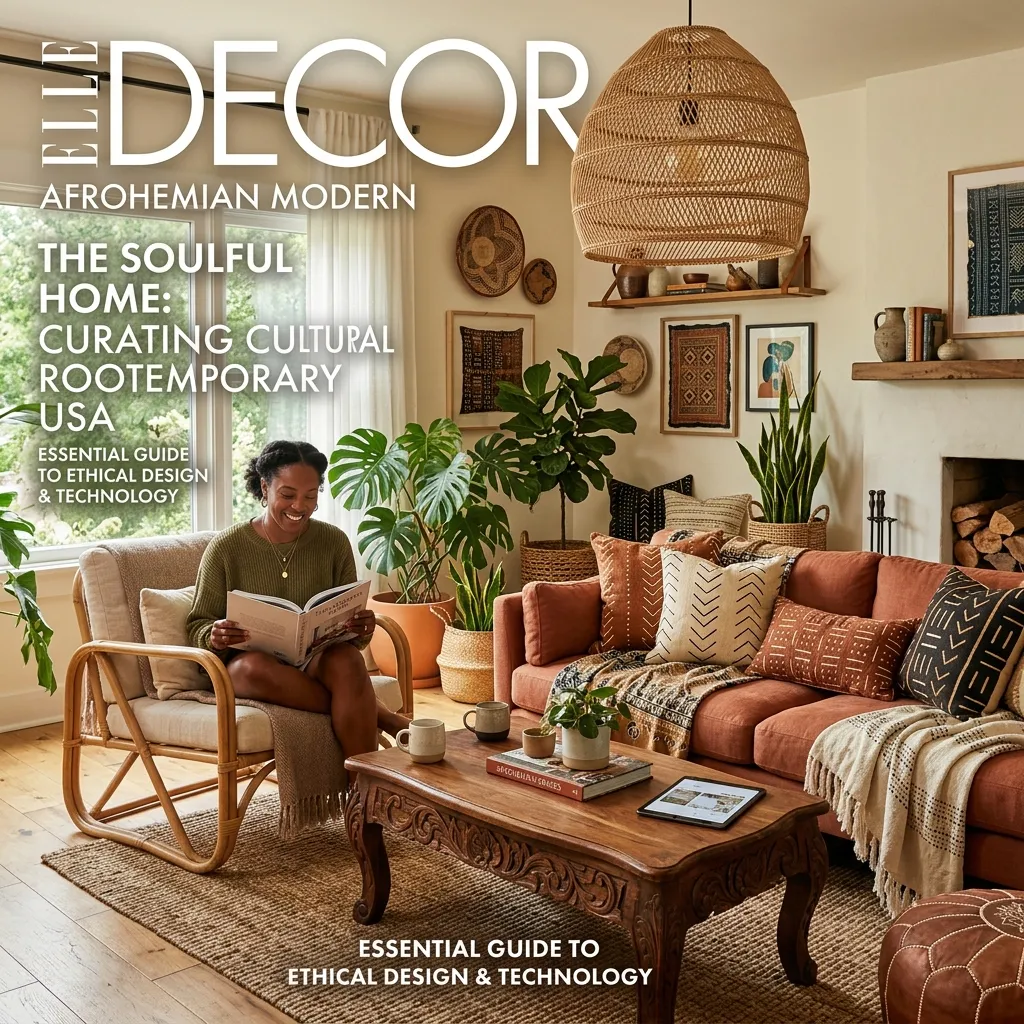
17 Afrohemian Decor Ideas That Bring Global Character Into Modern Homes
Quick answer: Afrohemian decor blends African textiles, patterns, and handcrafted objects with the relaxed layering of bohemian style. The result is a home that feels warm, storied, and personal. Earthy color palettes, mud cloth pillows, handwoven textiles, and natural materials like rattan and wood form the backbone of this look, while global artifacts and bold patterns add the finishing character.
Afrohemian style takes its name from two traditions that already share a lot of DNA: African design, with its bold patterns and handcrafted textiles, and bohemian decor, known for its relaxed layering and love of natural materials. Together, they create a home decor style that feels collected rather than decorated, as if every object arrived through a story rather than a shopping cart.
This isn’t a look you can buy in a single trip to a big-box store. Afrohemian interiors are built slowly, piece by piece, with an emphasis on craftsmanship and cultural meaning. A mud cloth pillow, a beaded bowl, a hand-carved stool — each item carries its own history, and that history is exactly what gives the room its soul.
Below are 17 decor ideas to help you bring this warm, global aesthetic into your own space, whether you’re starting from a blank room or simply looking to layer in a few meaningful pieces.
Recommended Items for Your Home Decor
1. Earthy Color Palettes

Afrohemian rooms start with an earthy color palette. Think terracotta, clay, ochre, deep browns, and warm greens — tones pulled directly from African soil, textiles, and landscapes. These colors work because they’re inherently warm and grounding, unlike the cool grays and stark whites of more minimalist styles. Paint one wall in a rich burnt-orange or clay tone, then let your furniture and textiles pick up the rest of the palette. If you love the calming effect of a muted, nature-inspired hue, these Sage Green Living Room Ideas offer a softer companion tone that pairs beautifully with terracotta accents.
2. Handwoven Textiles and Throws

Handwoven textiles anchor the tactile, layered feel that defines Afrohemian decor. Look for throws and blankets woven from cotton or wool, ideally made using traditional techniques like strip weaving from West Africa. Drape one over the arm of a sofa or fold it at the foot of a bed. The slightly imperfect, handmade texture is the point — it signals craftsmanship rather than mass production. For more inspiration on layering rich textiles into a living space, the approach used in these Indian Living Room Decor Ideas follows a similar philosophy of texture-first styling.
3. African Mud Cloth Pillows

Mud cloth, or bògòlanfini, is a handmade Malian cotton fabric dyed using fermented mud and plant-based dyes. Its bold geometric patterns in black, cream, and rust make it one of the most recognizable textiles in African design. A few mud cloth pillows on a neutral sofa introduce pattern and cultural authenticity without overwhelming the room. Because the patterns are so graphic, two or three pillows are usually enough to make a statement.
4. Rattan and Wicker Furniture

Rattan and wicker furniture bring natural texture and a sense of handcraft into an Afrohemian room. A woven accent chair, a rattan side table, or a wicker headboard adds warmth without adding visual weight — these materials are light in both color and feel. They also happen to bridge several design eras beautifully; the same rattan pieces that suit a boho space were once staples of ’70s interiors, as shown in these Retro Living Room Inspirations. Pair a rattan chair with a mud cloth cushion for an easy, layered look.
5. Global Artifacts and Sculptures

Sculptural objects give an Afrohemian room its collected, well-traveled feel. Carved wooden masks, small bronze figures, or hand-thrown ceramic vessels work well displayed on a shelf, mantel, or console table. Group items in odd numbers — three or five — and vary their heights so the eye has somewhere to travel. These pieces don’t need to fill every surface; a few well-chosen artifacts say more than a crowded display.
6. Kente-Inspired Patterns

Kente cloth, originally woven by the Akan people of Ghana, is known for its vivid, interlocking geometric patterns in gold, red, green, and blue. Kente-inspired fabric shows up beautifully on accent chairs, table runners, or even a single framed textile panel. Because the colors are so saturated, one Kente-patterned piece is often enough to energize an entire room built on a neutral or earthy base.
7. Macramé Wall Art

Macramé wall hangings add a soft, sculptural texture that’s become a signature of bohemian interiors. Choose a piece in natural cream cotton to keep the look airy, or look for one dyed in a warm rust or ochre to tie into an earthy palette. Hung above a sofa or in a reading nook, macramé introduces dimension without requiring any color commitment. It’s a technique widely used across Modern Boho Living Room Ideas, where texture does the heavy lifting instead of color.
8. Layered Rugs

Layering rugs is a simple technique that adds warmth and definition to a seating area. Start with a natural fiber base, like jute or sisal, then layer a smaller patterned rug on top — a Kilim, mud cloth-inspired print, or a vintage Berber design all work well. The layering technique also solves a practical problem: it lets you introduce bold pattern in a smaller, contained dose rather than across an entire floor.
9. Statement Plants and Greenery

Greenery brings life and softness into an Afrohemian space, balancing out all the rich textures and patterns. Large-leaf plants like a fiddle leaf fig, snake plant, or bird of paradise read as especially fitting, since they echo the lush, tropical landscapes that inspire much of the style’s color palette. Place a statement plant in a woven or ceramic basket planter to keep the natural-material theme consistent from floor to leaf.
10. Wooden Accent Furniture

Solid wood furniture, especially pieces with visible grain and hand-carved details, forms the structural backbone of an Afrohemian room. Look for a coffee table, stool, or console carved from a single piece of timber, ideally with rounded, organic edges rather than sharp modern lines. These pieces feel substantial and grounded, offsetting the lighter textures of rattan and textiles elsewhere in the room.
11. Beaded Decor and Accessories

Beaded objects — bowls, decorative gourds, jewelry displayed as art, or beaded coasters — add a jewel-like pop of color and craftsmanship. Many traditional African beadwork techniques use vibrant glass or wooden beads in patterns that carry cultural significance. Displaying a few beaded pieces on a tray or shelf gives the room small, colorful focal points that reward a closer look.
12. Global-Inspired Lighting

Lighting sets the mood in any home decor style, and Afrohemian rooms benefit from fixtures that double as sculpture. A woven rattan pendant, a beaded lampshade, or a carved wooden table lamp all cast warm, textured light across the room. Because these fixtures are so visually interesting, they work well as a room’s main light source rather than a background detail.
13. Gallery Walls with Cultural Art

A gallery wall built around African art, textile panels, and travel photography turns a blank wall into a personal archive. Mix mediums — a framed textile next to a painted canvas next to a black-and-white photograph — and use varied frame sizes to keep the arrangement feeling organic rather than rigid. If your gallery wall shares space with a television, these Creative TV Wall Ideas show several ways to fold a screen into a larger art display without letting it dominate the room.
14. Woven Baskets as Decor

Woven baskets serve double duty in an Afrohemian home: storage and style. Use large floor baskets to hold blankets or firewood, and smaller ones on shelves to corral remotes or magazines. Many African basket-weaving traditions, like those from Rwanda and Botswana, produce baskets with intricate geometric patterns sturdy enough to hang on a wall as art in their own right.
15. Bold Printed Curtains

Curtains are an easy way to introduce pattern at scale. A bold African print — think large-scale Ankara or wax-print fabric in saturated color — can transform a plain window into a focal point. Because curtains cover a large visual area, choose a print that complements rather than competes with your other patterned textiles, like mud cloth pillows or a Kente table runner.
16. Natural Materials and Textures

Natural materials tie every other element of an Afrohemian room together. Raw wood, woven grass, unglazed clay, and rough-hewn stone all bring an organic, tactile quality that mass-produced materials can’t replicate. Prioritizing these materials over synthetic finishes keeps the room feeling handmade and connected to the earth, which is the whole point of the style.
17. Mixing Modern and Traditional Elements

The final, defining move of Afrohemian decor is the mix itself. Pair a sleek modern sofa with a hand-carved African stool. Set a minimalist glass coffee table on top of a richly patterned Kilim rug. This tension between old and new, handmade and manufactured, is what keeps the style from feeling like a themed room — it feels instead like a home built over time, by someone with a genuine point of view.
Bringing It All Together
Afrohemian decor rewards patience over speed. Rather than buying every item on this list at once, choose two or three ideas that resonate most — perhaps an earthy palette, a few mud cloth pillows, and a woven pendant light — and build outward from there. The style is meant to feel collected, and collections take time.
Start with the foundation: wall color, a natural fiber rug, and one or two solid wood furniture pieces. From there, layer in textiles, then pattern, then the smaller sculptural and beaded details that make the room feel personal. Done well, an Afrohemian living room becomes one of the most inviting spaces in the house — rich with color, texture, and story, and entirely your own.
FAQs
What is Afrohemian decor?
Afrohemian decor combines African design elements — mud cloth, Kente patterns, carved wood, and handwoven textiles — with the relaxed, layered aesthetic of bohemian style. It emphasizes natural materials, handcraft, and cultural storytelling over mass-produced furnishings.
How much does it cost to decorate a room in Afrohemian style?
Costs vary widely depending on whether you buy authentic handcrafted pieces or Afrohemian-inspired reproductions. A budget-friendly approach might start with a few printed pillows and a woven basket, while a fuller room with authentic textiles and carved furniture can represent a more significant investment over time.
Can I mix Afrohemian decor with a modern living room?
Yes. Mixing modern and traditional elements is actually a core principle of the style. Pairing a minimalist sofa with a hand-carved stool or a sleek glass table with a patterned Kilim rug creates the contrast that defines Afrohemian interiors.
Where can I find authentic African textiles and decor?
Look for fair-trade importers, artisan cooperatives, and specialty home decor shops that source directly from African makers. Buying authentic pieces supports traditional craftsmanship and ensures the patterns and techniques are used respectfully.
Is Afrohemian decor the same as boho decor?
No. Boho decor draws from a broad mix of global influences, while Afrohemian decor specifically centers African textiles, patterns, and craftsmanship within that bohemian framework. It’s a more focused, culturally rooted expression of the wider boho aesthetic.


