15 Leather Banquette Ideas for Cozy Dining Spaces
A leather banquette can completely change the way a dining area feels. It adds the comfort of upholstered seating, the practical appeal of a built-in bench, and the rich visual character of leather—all while making smart use of space. Whether you are working with a spacious dining room, a compact apartment kitchen, or a small breakfast nook, the right leather banquette ideas can create a dining space that feels both inviting and thoughtfully designed.
One of the biggest advantages of banquette seating is its ability to fit neatly against a wall or into a corner. Unlike a collection of individual dining chairs, a banquette can make use of otherwise awkward or underused space. Leather also brings durability and a polished finish, making it particularly useful for busy households where dining furniture needs to handle everyday meals.
The style possibilities are surprisingly broad. A caramel leather bench can warm up a modern kitchen, while deep brown leather paired with dark wood can create a cozy vintage dining nook. For something more contemporary, try black leather with a sculptural table and minimalist lighting.
Below, you’ll find 15 distinct leather banquette ideas for cozy dining spaces, including options for small rooms, apartments, modern homes, traditional interiors, and budget-conscious makeovers.
Recommended Items for Living Room
1. Caramel Leather Banquette by a Window

A caramel leather banquette positioned beneath or beside a large window creates a naturally cozy dining nook while taking advantage of available daylight.
Choose a warm cognac or caramel leather with a slightly matte finish rather than an overly glossy surface. Pair it with a simple oak or walnut dining table and slim dining chairs on the opposite side.
Keep the window area relatively uncluttered so the banquette remains connected to the natural light. Linen curtains in cream, oatmeal, or soft beige can add softness without competing with the leather.
For accessories, try a textured runner, ceramic centerpiece, and pendant light above the table.
Small-space tip: A wall-mounted or pedestal table can give you more legroom and make cleaning around the banquette easier.
2. L-Shaped Leather Banquette

An L-shaped banquette is one of the most practical choices for maximizing seating in a corner. It uses two walls instead of requiring chairs to surround all sides of the table.
This layout works especially well in open-plan kitchens, breakfast areas, and dining corners. Use a rectangular or square table that fits comfortably within the L shape.
Deep brown leather gives the seating a classic appearance, while cognac or tan leather feels lighter and more contemporary.
Add a few removable cushions along the back for extra comfort, but avoid filling the banquette with too many pillows because they can reduce usable seating space.
Design tip: Match the banquette’s leather tone with another element in the room, such as cabinet hardware, bar stools, or a nearby leather accent chair.
3. Black Leather Banquette with a Modern Table

For a sleek contemporary dining area, combine a black leather banquette with a clean-lined dining table.
Black leather works particularly well with walnut, oak, marble, glass, or stone tabletops. To keep the space from feeling too severe, introduce warm wood and softer materials around it.
A sculptural pendant light can become the focal point above the table, while simple artwork adds personality to the wall behind the banquette.
Choose a low-profile design if you want the space to feel modern and uncluttered. Matte or lightly textured black leather generally works better than a highly reflective finish for a relaxed home environment.
4. Cognac Leather + Warm Wood

Cognac leather and warm wood are a natural pairing for anyone who wants a dining area with a cozy, timeless atmosphere.
Start with a cognac leather banquette and pair it with walnut, teak, oak, or another warm-toned wood. The combination works beautifully in mid-century modern, contemporary, rustic, and transitional interiors.
Add woven pendant lighting, cream-colored textiles, and a vintage-inspired rug to reinforce the warmth.
You can also repeat the leather tone in a nearby dining chair or small decorative object, but there is no need to match everything exactly.
Budget idea: If a full leather banquette is outside your budget, focus on a custom-sized bench cushion upholstered in leather or quality faux leather and pair it with a simple wood bench base.
5. Leather Banquette with Hidden Storage

A storage banquette is particularly useful in smaller homes because it combines seating with valuable concealed storage.
The base can contain lift-up compartments or drawers for table linens, serving pieces, seasonal kitchenware, or items you do not need every day.
Use durable leather for the seat and backrest, especially if the banquette will receive frequent use. Choose hardware that is easy to access without interfering with the table.
For a built-in look, match the base to existing cabinetry. In a rental, a freestanding storage bench with a custom leather cushion can create a similar effect without permanent construction.
Practical tip: Avoid storing frequently used heavy objects inside a lift-up bench if the compartment requires removing the entire seat cushion every time.
6. Compact Leather Banquette for Small Apartments

A small apartment does not need a large dining room to accommodate a banquette. A narrow bench placed against one wall can create a functional dining zone without consuming the floor space required for several chairs.
Choose a shallow-profile banquette and pair it with a compact round or rectangular table. Armless chairs on the opposite side can slide completely underneath the table when not in use.
Light caramel, tan, or medium brown leather can help keep the seating visually warm without dominating the room.
Use a wall-mounted sconce instead of a floor lamp and choose furniture with slim legs to preserve visual openness.
Space-saving trick: A pedestal table eliminates bulky corner legs and makes it easier to slide chairs and people into place.
7. Leather Banquette with a Round Dining Table

A round dining table softens the structured appearance of a banquette and makes a compact dining nook feel more social.
This combination works particularly well with an L-shaped or curved banquette. A round table allows people to move around the seating more easily and avoids sharp corners in tight walkways.
Choose a table finish that contrasts gently with the leather. For example, a walnut table looks beautiful with caramel leather, while a light oak table can brighten deep brown upholstery.
Keep the centerpiece low so it does not interrupt conversation.
Best for: breakfast nooks, apartments, small dining rooms, and corner seating areas.
8. Vintage Leather Banquette Dining Nook

For a dining space with character, take inspiration from classic restaurant booths and vintage diners without making the room feel themed.
Choose dark brown, oxblood, or aged cognac leather with visible texture. Pair it with a compact wood table, vintage-style pendant, framed artwork, and simple ceramic pieces.
A patterned tile floor or retro-inspired rug can reinforce the look, but use restraint with additional nostalgic elements.
The goal is to capture the warmth of vintage furniture while keeping the overall room appropriate for a modern home.
Styling tip: Mix one or two vintage-looking pieces with contemporary furniture so the dining area feels collected rather than like a replica of a period interior.
9. Deep Brown Leather with Cream Upholstery

Deep brown leather becomes softer and more approachable when paired with cream-colored upholstery and textiles.
Use the leather for the banquette seat and introduce cream through cushions, nearby dining chairs, curtains, or a textured rug.
Natural materials such as oak, linen, cane, stone, and ceramic work particularly well with this palette.
This is a useful approach if you love dark leather but do not want your dining area to feel visually heavy. The lighter elements create contrast while keeping the overall palette warm.
For everyday dining, choose washable or removable cream textiles where possible.
10. Leather Banquette with Wall Paneling

Pairing a leather banquette with architectural wall treatment can turn a simple dining nook into a defined design feature.
Consider vertical wood slats, painted panel molding, beadboard, or simple wainscoting behind the seating. The wall treatment creates a backdrop that makes the banquette feel intentional and built into the room.
For a sophisticated look, try walnut paneling behind caramel leather. For a lighter interior, use painted cream or warm beige paneling with medium-brown leather.
Add a slim picture ledge, artwork, or wall sconces rather than covering the entire wall with decorative objects.
Rental option: Use removable molding or temporary wood-look wallpaper to create a similar visual effect without permanent changes.
11. Leather Banquette Breakfast Nook

A leather banquette can make a breakfast nook feel like a dedicated little destination rather than simply another corner of the kitchen.
Use a compact table with comfortable spacing and position the banquette along the wall. A warm tan or cognac leather works particularly well because it brings softness to kitchens dominated by cabinetry and hard surfaces.
Add a pendant light directly over the table to visually define the eating area.
A few framed prints, a small plant, and textured napkins can finish the space without making it feel crowded.
If the nook doubles as a homework or laptop area, choose a table with enough depth for both dining and occasional work.
12. Curved Leather Banquette

A curved leather banquette makes a strong architectural statement and can be especially effective in larger dining areas or unusual corners.
Instead of a straight rectangular bench, the curved form creates a softer flow around a circular or oval table.
Deep green, chocolate brown, cream, or cognac leather can all work beautifully depending on the room’s overall palette.
Because curved upholstery is visually distinctive, keep the surrounding furniture relatively simple. Let the shape of the banquette provide the drama.
Small-room alternative: A gently rounded corner bench can provide some of the same softness without requiring a large custom installation.
13. Leather Banquette with Industrial Details

Leather naturally complements industrial materials such as black metal, exposed brick, concrete, and reclaimed wood.
Try a cognac or dark brown leather banquette with a black metal table base and a thick wood tabletop. Add simple metal lighting and restrained artwork.
The leather prevents the harder materials from feeling cold, while the metal and wood give the seating a structured appearance.
To keep the room from becoming too masculine or heavy, introduce one softer element such as linen curtains, a textured rug, or warm neutral artwork.
This look is particularly effective in loft-style apartments and modern open-plan kitchens.
14. Rich Leather with Colorful Dining Accents

Leather does not have to mean a neutral dining room. A rich brown or caramel banquette can actually provide a beautiful foundation for bolder colors.
Try adding deep blue dining chairs, olive green curtains, burgundy artwork, mustard cushions, or colorful ceramic tableware.
Keep the leather relatively simple so the surrounding colors can stand out. Warm wood and brass can help connect the different shades.
This approach is particularly useful if you already have colorful kitchen cabinetry or artwork and need seating that anchors the palette rather than competing with it.
Design rule: Choose one or two accent colors and repeat them deliberately instead of introducing many unrelated shades.
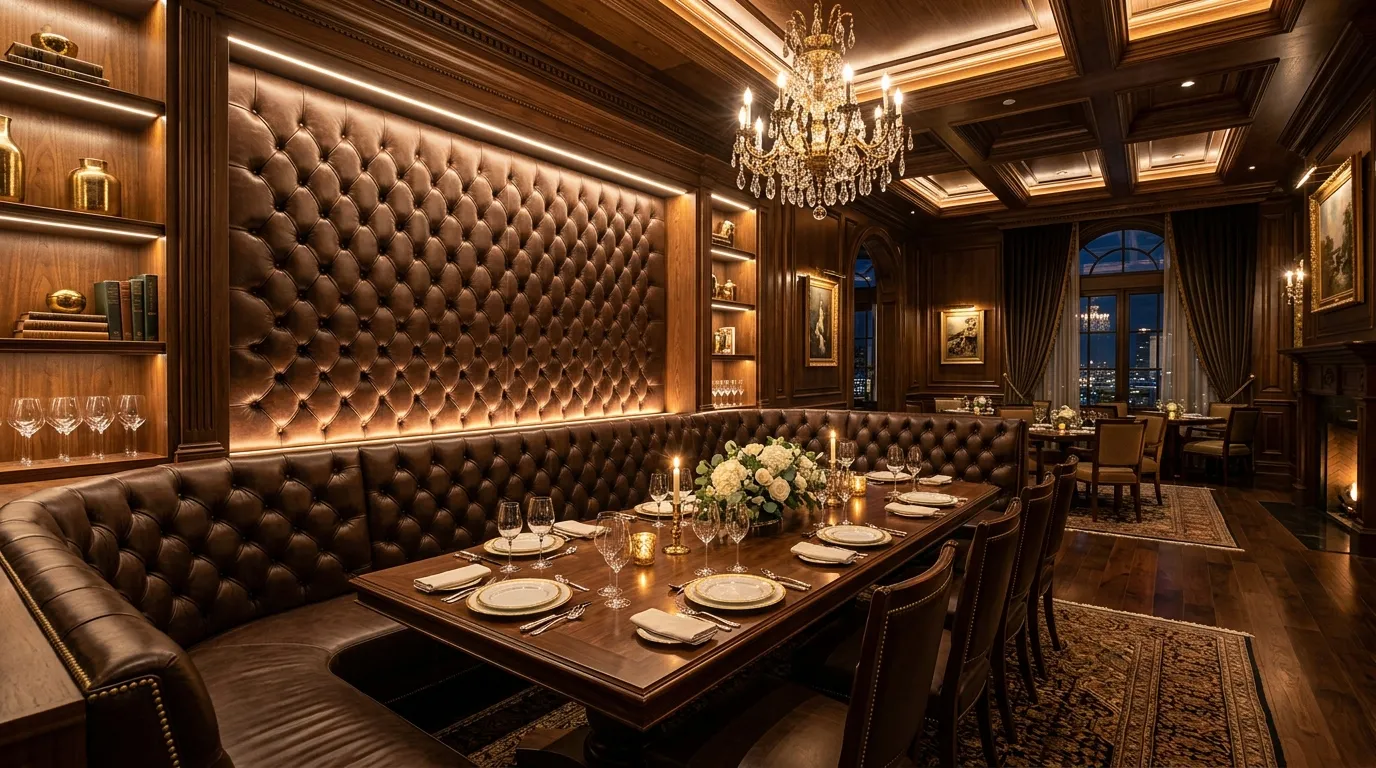
15. Floor-to-Ceiling Luxury Dining Banquette

For a dramatic dining space, build the banquette into a larger wall composition rather than treating it as an isolated piece of furniture.
A tall upholstered back can extend upward behind the table, creating a luxurious restaurant-inspired effect. Pair rich brown, black, or deep burgundy leather with marble, dark wood, brushed brass, or sculptural lighting.
Vertical wall paneling or decorative molding can frame the banquette and make the entire dining area feel architectural.
Keep the table relatively simple so the seating remains the focal point. A large pendant or chandelier positioned precisely over the table can complete the composition.
This approach works best in dedicated dining rooms where there is enough visual breathing room for the dramatic proportions.
Frequently Asked Questions
Is leather a good material for a dining banquette?
Yes. Leather is durable, easy to wipe clean, and develops character over time. It can be especially practical for dining spaces where spills and everyday wear are common.
What color leather is best for a dining nook?
Cognac, caramel, medium brown, and deep brown are versatile choices. Black creates a more contemporary appearance, while burgundy or deep green can make the banquette feel more decorative.
Are leather banquettes comfortable?
They can be very comfortable when the seat depth, cushion firmness, back angle, and table height are properly designed. A supportive back cushion and appropriately padded seat make a noticeable difference.
Can I add a leather banquette to a rental?
Absolutely. A freestanding bench with a leather cushion is the simplest approach. You can also use a movable storage bench or a custom upholstered cushion on an existing bench rather than building permanent cabinetry.
How much space should I leave around a dining banquette?
Leave enough clearance for people to comfortably sit down, stand up, and walk around the table. The exact amount depends on the table size, room layout, and whether the opposite side uses chairs.
What table works best with a banquette?
Round and oval tables are excellent for compact or curved banquettes, while rectangular tables work well with straight or L-shaped seating. Pedestal bases are especially useful because they reduce leg interference.
How do I make a leather banquette feel cozy?
Layer it with warm lighting, textured rugs, natural wood, soft curtains, artwork, and a few comfortable cushions. Leather provides structure, so adding softer materials around it helps create a more relaxed dining atmosphere.
Conclusion
A leather banquette can be much more than extra seating. It can define an awkward corner, maximize a small dining area, provide hidden storage, and give a kitchen or dining room a strong visual focal point. From a compact apartment breakfast nook to a dramatic built-in dining room, there are plenty of ways to adapt the idea to your home’s size and style.
The most successful leather banquette ideas usually balance the richness of leather with softer or more natural materials. Warm wood, linen, woven textures, ceramics, rugs, and layered lighting can keep the seating from feeling overly formal or heavy. Choosing the right shape is equally important—a straight bench works beautifully along a wall, while an L-shaped or curved design can make better use of a corner.
You also don’t need a fully custom renovation to get the look. A freestanding bench, leather cushion, compact table, and thoughtfully chosen lighting can create a convincing dining nook on a smaller budget. Start with the space you already have, consider how your household actually uses it, and choose a banquette style that makes everyday meals feel comfortable, practical, and inviting.


